one.five closes €14M Series A to tackle packaging R&D waste
Hamburg-based startup one.five has raised €14 million in Series A funding as it targets a costly problem in the packaging industry: innovation that fails before it ever reaches the market. The company says that while many brands have set ambitious climate targets, only 15% to 20% of packaging is sustainable globally, and the innovation process itself has become increasingly inefficient—nearly 60% of packaging R&D spending goes toward products that never achieve commercial success.
The round was led by Dr Hans Riegel Holding, a shareholder of HARIBO, with participation from 212 NexT, Symbia VC, Btomorrow Ventures, KIMPA Impact, Zubi Capital, and existing backers Speedinvest, Planet A, Green Generation Fund, Climentum Capital, Revent, and WEPA. With the new financing, one.five’s total funding reaches €24.5 million. The company did not disclose its valuation.
Building product-market fit into packaging design
one.five positions its platform as an answer to a structural challenge: packaging development often optimises for technical feasibility and cost, but fails to integrate real-world requirements—brand constraints, regulatory shifts, supply-chain realities, and consumer expectations—early enough to prevent dead-end R&D.
The company’s approach is to embed Product-Market Fit directly into packaging development by translating “key success factors” into measurable design requirements. In practice, it aims to help manufacturers and material innovators decide which concepts are most likely to meet market demand before they spend heavily on pilots and scale-up.
Founders with FMCG and operations experience
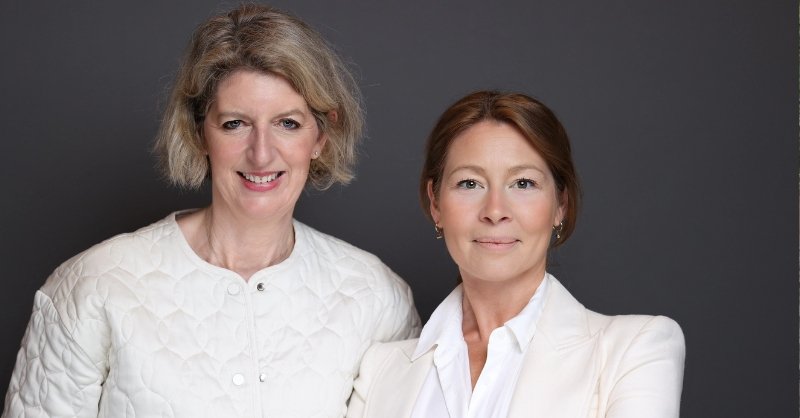
one.five was founded by Martin Weber, former CFO of vertical farming company Infarm, and Claire Hae-Min Gusko, Infarm’s former Head of Business Strategy. The founders say their mission aligns with the 1.5°C climate goal by focusing on measurable innovation that can deliver environmental impact at industrial scale.
“We wanted to solve a big problem,” Claire Hae-Min Gusko said, describing how the team identified packaging as a large, complex market after working in fast-moving consumer goods contexts. She said the platform is designed to define product needs precisely—such as requirements for refrigerated foods—while also incorporating brand-level constraints including sustainability targets, pricing, and supply-chain parameters.
Those inputs are translated into packaging material features used to scout and evaluate potential solutions. The goal, she said, is to select only options with a high likelihood of meeting both product and brand needs—“Product market fit, without the guesswork.”
The “Compass” tool and live market intelligence
At the core of the platform is one.five’s Product Market Fit Compass, which the company describes as a benchmarking tool for paper and coating manufacturers. It maps product and brand requirements against regulatory and market realities, predicts performance, and isolates designs with the highest likelihood of success.
By combining AI modelling with live market intelligence, the system is intended to help customers cut down on failed developments, shorten time-to-market, and focus R&D budgets on materials that brands and regulators are likely to accept. one.five argues that this is distinct from packaging technology providers focused primarily on manufacturing efficiency, positioning itself as a platform for improving market fit for next-generation materials.
Why investors are paying attention
The funding comes as packaging faces mounting pressure from multiple directions: corporate climate commitments, tightening regulations, and shifting supply chains. For brands and packaging suppliers, the cost of placing the wrong bet—on materials, coatings, barrier properties, recyclability, or compliance—can be significant, especially if a product fails late in development.
one.five is pitching its platform as a way to reduce that downside by improving decision-making earlier in the pipeline. If the company can reliably lower the industry’s failure rate, it could unlock both financial savings and faster adoption of sustainable alternatives—two outcomes that often compete in practice.
Diversity and leadership representation
Asked about diversity, Hae-Min Gusko said the company has a 50/50 female-to-male ratio at the leadership level and a 30/70 split across the overall team.
On being a woman in tech, she advised founders and operators to accept help when it is offered. “It can feel like there’s a point to prove… but this is bullshit,” she said, adding that no one builds companies alone and that support from co-founders, investors, customers, and colleagues should be taken without shame.
What’s next: expanding the AI and data foundation
one.five said the new capital will be used to expand its AI technology and data foundation, with the aim of making it easier for companies across the packaging value chain to build products faster and with fewer failed experiments.
Looking ahead, Hae-Min Gusko said the company’s ambition is to become the packaging industry’s “universal operating system” for product development—a platform intended to help the sector adapt to changing global supply chains and a rapidly evolving regulatory environment.
If successful, one.five could become a key infrastructure layer for packaging innovation, shifting the industry away from expensive trial-and-error and toward development processes that are measurable, market-aligned, and more likely to deliver sustainability outcomes at scale.
Related