Lucend secures €2.7 million to expand data-centre optimisation to the U.S.
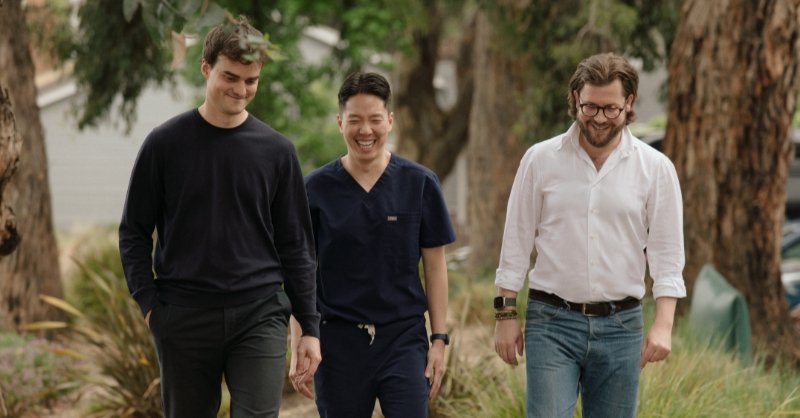
Amsterdam-based Lucend, a Dutch startup focused on software-led optimisation for data-centre operations, has raised €2.7 million ($3.3 million) in seed funding as it prepares to expand into the United States. The company says the round will support its move into the world’s largest data-centre market and accelerate deployment of its “Transparent AI” platform, which generates prescriptive recommendations for operators while keeping humans in control of final decisions.
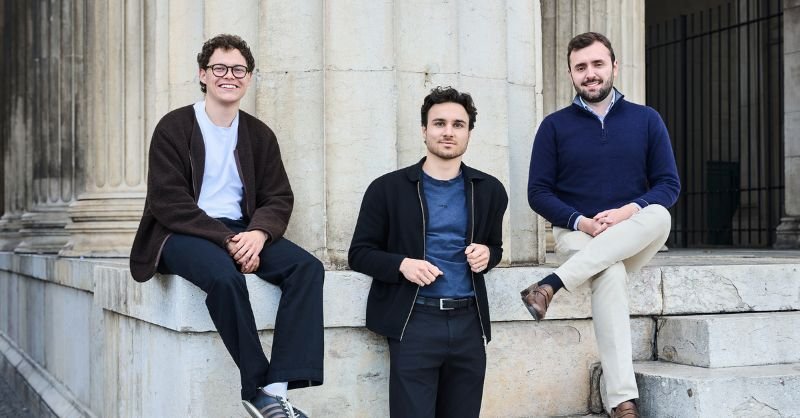
The seed round was led by Remarkable Ventures Climate (RVC). Other participants include Mitsubishi Electric’s Innovation Fund, New Climate Ventures, Avesta Fund, and Stepchange Ventures, with support from existing investor 4impact capital.
Human-in-the-loop optimisation built for critical infrastructure
Lucend positions its product as a risk-aware approach to operational efficiency in environments where uptime is non-negotiable. “Lucend’s Transparent AI platform analyses billions of data points daily and provides prescriptive recommendations that data centre operators can review and choose whether or not to implement,” said co-founder Jasper de Vries. He added that the company’s “human-in-the-loop” model is designed to build trust over time, allowing operators to validate recommendations before acting.
Co-founder René Gompel framed the pitch around the rising strain on data-centre resources. “As AI’s demand for data centres grows, data centre operators need to prioritise efficiency and uptime while also conserving resources like energy and water,” he said. According to the company, the platform can deliver “consistent, measurable efficiency improvements” without new capital expenditure or disruption to existing operations—an important promise as operators face both cost pressure and tightening local constraints on power and water.
From Coolgradient to Lucend, founded in 2023
Founded in 2023 and formerly known as Coolgradient, Lucend says it uses existing sensor and operational data to create verifiable optimisation insights for data-centre teams. The company describes itself as a “global technology company” aiming to provide daily clarity for operations through Transparent AI. Both founders, Jasper de Vries and René Gompel, bring roughly 20 years of technology leadership experience, according to the company.
Lucend says its platform connects to existing infrastructure with no new hardware required, turning static control systems into adaptive, self-learning environments. The company claims it can identify relationships across as many as 300 billion sensor readings, and that its AI analyses billions of data points each day to produce recommendations operators can accept, reject, or modify.
Strategic investor interest from Mitsubishi Electric
The round includes participation from Mitsubishi Electric’s Innovation Fund, indicating strategic interest in pairing optimisation software with hardware and control systems. Komi Matsubara, Executive Officer (Vice President, Business Innovation) at Mitsubishi Electric Corporation, said the company expects Lucend’s technology to improve operational efficiency and reduce costs. He added that combining Mitsubishi Electric’s hardware and infrastructure control capabilities with Lucend’s AI platform could “deliver greater value” for customers and strengthen competitiveness in the data-centre business.
Deployments across multiple climates and facility designs
Lucend reports it has been implementing its solution across dozens of data centres since 2023, spanning Melbourne, Singapore, Paris, London, Amsterdam and Chicago. The company says it works with global operators including Digital Realty, Global Switch and T5, collecting data across different climates and facility designs—from closed-loop systems to adiabatic cooling approaches.
Its platform ingests operational signals from cooling and electrical assets such as chillers, IACs, UPSs and generators, as well as granular control and telemetry points including valve openings, fan speeds, temperature setpoints and pressures.
Based on customer results cited by the company, reported outcomes include: a roughly 40% reduction in power usage effectiveness (PUE), around 25% reduction in power use, approximately 30% reduction in water use, and about 40% improvement in team efficiency. The company did not provide customer-by-customer breakdowns in the announcement.
Why the U.S. expansion matters now
More than half of the world’s data centres are located in the U.S., making it a pivotal market for any optimisation vendor. The expansion also comes as regulatory and grid constraints increasingly shape where and how data-centre capacity can scale. While the U.S. has no single federal efficiency mandate, Lucend and its investors point to tightening state and local requirements.
The company cited examples including New York State sustainability frameworks that can penalise high electricity-consuming facilities, and rules in Santa Clara, California that require operators to allocate part of a substation’s capacity to surrounding customers—reducing available energy for new data-centre load. It also referenced a July 2025 White House directive aimed at accelerating data-centre permitting, which underscores the challenge of expanding capacity while navigating local energy constraints.
Context: Europe’s broader wave of AI infrastructure investment
Lucend’s seed round arrives amid a wider European surge of funding across AI-driven infrastructure and energy optimisation. In 2025, London-based Nscale raised a reported €958 million Series B to scale AI cloud and data-centre infrastructure. Germany’s etalytics extended its Series A to €16 million to expand AI-powered energy optimisation software, and Stuttgart-based Q.ANT secured €62 million to develop photonic processors aimed at more energy-efficient computing.
While those deals span capacity build-out and next-generation hardware, Lucend is positioning itself squarely on operational efficiency—seeking performance gains from existing infrastructure rather than new builds.
Investor thesis: efficiency as the fastest lever
Murat Aktihanoglu, Managing Partner at Remarkable Ventures Climate (RVC), called Lucend “category-defining,” citing both product execution and early field performance. He also argued that energy availability is becoming a central constraint for operators, cloud providers and large enterprises. “Lucend offers an immediate solution to capture the massive opportunity in the U.S.,” he said, adding that the firm plans to support the company’s growth through 2026 and beyond.
With the new funding, Lucend plans to scale its U.S. go-to-market efforts and broaden deployments as operators look for near-term ways to improve efficiency, protect uptime and manage energy and water use.
Related