France’s AI mood swings from caution to deployment
At the World AI Cannes Festival (WAICF) on January 12–13, European founders and operators described a clear turning point: AI is no longer a side project run by innovation teams, but increasingly treated as core business infrastructure—an evolution many attendees said is accelerating in France.
Soumya Kanti Datta, CEO and founder of Digiotouch, said the conversation has shifted from whether companies should adopt AI to how quickly they can operationalise it. In sectors traditionally slower to embrace new technologies, including luxury, founders reported that internal pressure to deploy AI is rising, though winning approvals in France still often depends on trust-building and long sales cycles.
Joris Corvo, an AI architect at Alyce, pointed to a rapid change in customer expectations. Where early demonstrations triggered immediate questions about surveillance and GDPR compliance, Corvo said some clients now focus on practical outcomes—asking for features that support real-world search and analysis within video streams.
Humanoid robots return, but autonomy is the prize
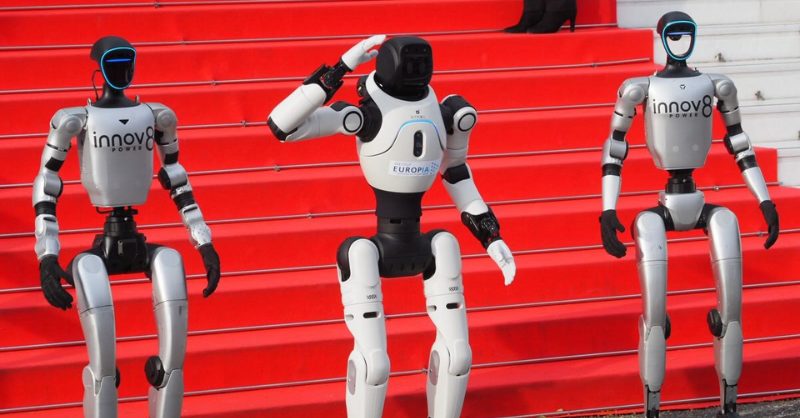
Robotics also had a strong presence. Reply showcased teleoperated humanoids designed for hazardous industrial environments, emphasising proprietary software for teleoperation and mapping, with a stated goal of moving toward full autonomy. France’s Innov8 presented humanoids and robodogs, positioning its robotics effort—launched in 2025—as an attempt to broaden access across security, logistics, agriculture, and education, including partnerships with manufacturers such as Unitree Robotics.
The adoption paradox: strong innovation, slower rollouts
Julien Launay, co-founder and CEO of Adaptive ML, described 2025 as the year enterprise AI in France “got serious,” with buyers demanding production-ready use cases that integrate into workflows, interact with data, and take action—often framed as agentic systems. He added that competition is increasingly measured in operational metrics such as performance, cost per token, and ROI.
Yet founders repeatedly returned to a broader European challenge: while France ranks highly in research, talent, and startup creation, adoption inside large organisations often lags the US. Whether 2026 becomes the year European enterprises scale AI beyond pilots may determine if Europe remains primarily a talent factory—or becomes a leader in AI deployment at scale.
Related