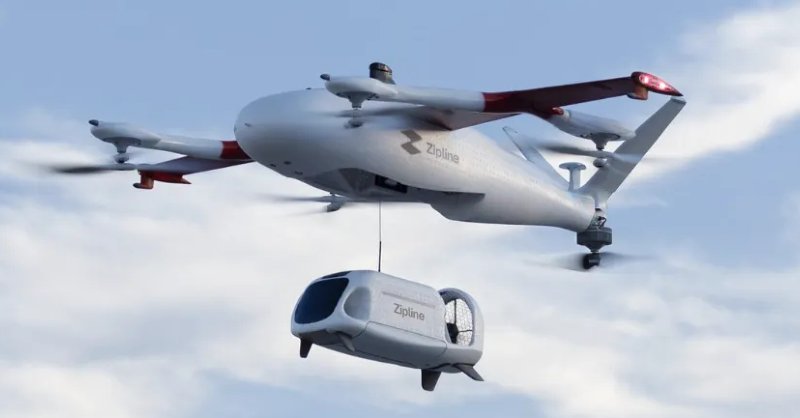
Zipline surpasses 2 million deliveries and secures $600 million
Zipline, a U.S.-based autonomous delivery company, has crossed two million commercial drone deliveries and raised more than $600 million in fresh funding, valuing the company at $7.6 billion. The round includes participation from Fidelity Management & Research Company, Baillie Gifford, Valor Equity Partners, and Tiger Global, underscoring renewed investor appetite for logistics technologies that promise faster delivery with lower emissions.
The milestone comes as cities and retailers contend with mounting last-mile delivery pressures. Urban congestion, rising delivery volumes, and concerns over emissions from traditional delivery fleets have pushed companies to look beyond vans and couriers. In that environment, autonomous logistics—once viewed as experimental—has increasingly been framed as a scalable alternative for time-sensitive categories such as healthcare, food, and retail.
From medical supply routes to broad consumer delivery
Led by CEO and co-founder Keller Cliffton, Zipline operates an autonomous aircraft network designed to deliver products directly to homes and healthcare facilities. The company says it supports deliveries of food, retail goods, and medical supplies, and currently serves more than 5,000 hospitals and health facilities globally.
Zipline reports it operates across four continents and makes a delivery “somewhere in the world every 30 seconds.” It also says deliveries have increased by about 15% week over week over the past seven months, a pace that suggests demand is accelerating as new sites come online.
Houston and Phoenix expansion planned for early 2026
Alongside the funding, Zipline said it plans to expand operations into Houston and Phoenix in early 2026, with additional U.S. cities expected later in the year. Eligible customers in those markets will be able to use the Zipline app to order from a catalog of “tens of thousands of items,” with deliveries arriving in as little as 10 minutes, according to the company.
The company also said it intends to use the new capital to expand into at least four new U.S. states this year, positioning the round as growth funding aimed at accelerating geographic rollout rather than solely supporting research and development.
Speed and scaling claims highlight operational momentum
Speed remains central to Zipline’s pitch. The company said its median flight time is three minutes, a metric it presents as a key advantage over road-based last-mile delivery that can be delayed by traffic and route density.
Zipline also pointed to faster ramp-up times at newer delivery sites. It said its first Dallas location took 10 weeks to reach 100 deliveries per day, while newer sites have reached that threshold in as little as two days. If sustained across markets, that improvement would signal maturing operational playbooks for permitting, infrastructure deployment, staffing, and customer adoption.
The company further claimed it has now completed more deliveries than all other companies in the sector combined, a statement aimed at establishing category leadership at a time when multiple drone and autonomous delivery efforts have struggled to move beyond pilots.
Safety and emissions narrative remains central to the model
Beyond speed, Zipline is emphasizing the environmental and safety profile of its approach. The company said its zero-emission aircraft have flown more than 125 million autonomous miles and delivered more than 20 million items, without a serious injury.
As regulators and municipalities balance innovation with public safety concerns, such metrics are likely to remain central to how autonomous delivery firms win approvals and public trust. Industry observers have frequently pointed to safety records, redundancy systems, and operational transparency as prerequisites for scaling autonomous aircraft in populated areas.
Investor interest returns to autonomous logistics
Participation from major asset managers and growth investors—including Fidelity Management & Research Company, Baillie Gifford, and Tiger Global—signals confidence that autonomous delivery can translate from high-utility niches, such as medical logistics, into broader consumer use cases.
In a market where last-mile delivery costs remain high and consumer expectations continue to rise, the business case for autonomous logistics often hinges on whether drones can reliably reduce delivery times and operational costs while avoiding the externalities of road traffic and vehicle emissions.
“Autonomous logistics has been maturing for more than a decade, and the last year has made it unmistakably clear that when deliveries are faster, cleaner, safer, and cheaper, demand isn’t just high, it grows exponentially,” said Keller Cliffton. “In 2026 autonomous logistics will become an everyday staple for people across several states in the U.S.”
With a new valuation of $7.6 billion, a growing delivery count, and plans to expand in major U.S. metros, Zipline is betting that drone delivery is shifting from early adoption to routine infrastructure—an evolution that could reshape how goods move through cities if the company can maintain speed, safety, and scale simultaneously.
Related