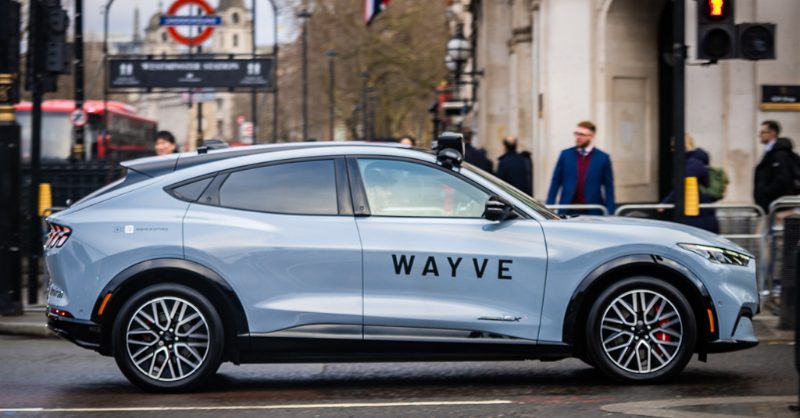
Wayve lands $1.5B to scale mapless autonomous driving
Wayve, a London-based developer of embodied AI for autonomous driving, has raised $1.5 billion, lifting the company’s valuation to $8.6 billion as it accelerates commercial deployment of its end-to-end driving system.
The funding includes a $1.2 billion Series D led by Eclipse, Balderton, and SoftBank Vision Fund 2, with participation from new backers including Ontario Teachers’ Pension Plan, Baillie Gifford, British Business Bank, Icehouse Ventures, Schroders Capital, and others. Strategic partners named in the round include Microsoft, NVIDIA, and Uber, alongside automakers Mercedes-Benz, Nissan, and Stellantis.
Why Wayve’s approach stands out
Autonomous driving has struggled to scale because many systems depend on high-definition maps, location-specific engineering, and rigid rule-based planning. Wayve says its AI Driver avoids those constraints by learning directly from real-world driving data and operating using onboard compute and native sensors, reducing the need for city-by-city customization.
Founded in 2017 by CEO Alex Kendall, the company positions its technology as a generalized model trained on driving data from more than 70 countries. It processes raw sensor inputs into driving actions, aiming to bypass the traditional modular stack of perception and planning. The startup has highlighted “zero-shot driving” performance, claiming deployments across more than 500 cities, including hundreds without local fine-tuning.
Commercial rollout: robotaxis first, consumer vehicles next
Uber is providing additional milestone-based funding tied to plans to launch Wayve-powered robotaxis in more than 10 markets. Trials are expected to begin in London in 2026 using L4-ready vehicles from partner OEMs. The company also expects its software to reach consumer cars starting in 2027, beginning with Nissan driver-assistance features and progressing toward higher autonomy levels.
Related