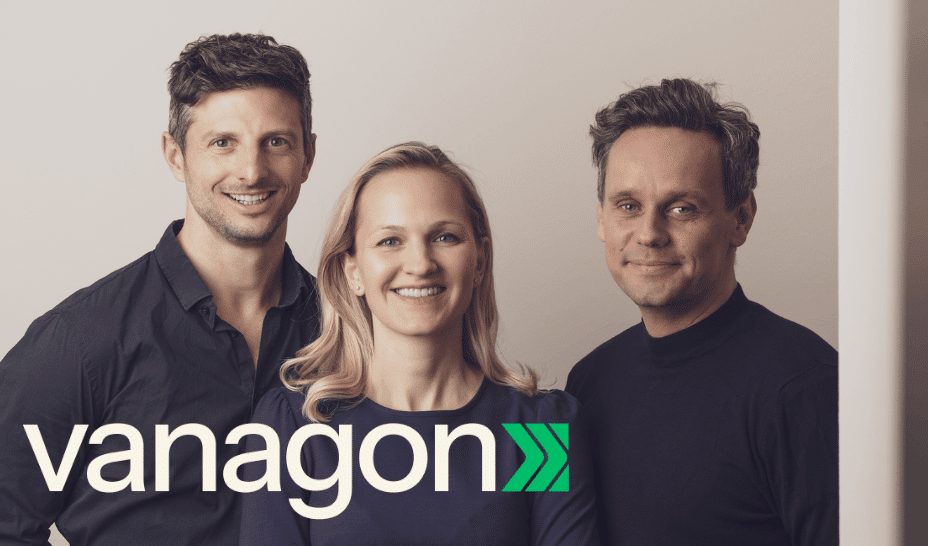
Vanagon Ventures raises €20 million to back Europe’s earliest DeepTech bets
Munich-based venture capital firm Vanagon Ventures has announced the final close of its €20 million Fund I, aimed at financing Europe’s pre-Seed DeepTech and AI startups building business-to-business products. The firm said it will focus on teams tackling “system-level” challenges and creating new categories enabled by advanced technologies—areas that often require different timelines and capital strategies than conventional software scaling.
The fund is backed by Allocator One, with additional limited partners including family offices and high-net-worth individuals, as well as senior technology executives from major companies such as Apple and Google. Vanagon Ventures said it plans to write initial tickets of up to €500,000 and build a portfolio of around 30 companies.
Targeting a gap in Europe’s pre-Seed market
The firm’s thesis centers on what it describes as a structural mismatch between many early-stage venture strategies and the realities of DeepTech and AI-native businesses. Unlike typical SaaS models—where early traction and repeatable go-to-market playbooks can emerge quickly—frontier technologies often demand longer R&D cycles, deeper technical validation, and more patient early capital.
“Most early-stage funds aren’t built for pre-Seed. They talk conviction but wait for proof,” said Sandro Stark, General Partner at Vanagon Ventures. “We built Vanagon from the ground up to back relentless founders on their life’s mission from day one.”
General Partner Susanne Fromm argued that the economics of venture investing are shifting earlier as AI changes how companies are built and scaled. “The steepest value creation is shifting to the earliest stages, our sweet spot,” she said, adding that some investors still apply SaaS-oriented frameworks that may not fit DeepTech commercialization in B2B.
Focus areas: spatial tech, quantum, robotics, frontier software
Vanagon Ventures said it will prioritize investments that support Europe’s “sovereignty and sustainability,” with particular attention to spatial and AI, quantum computing, robotics, and frontier software. The firm’s emphasis reflects a broader European narrative: converting strong research output into globally competitive companies, especially in technologies increasingly viewed as strategic.
General Partner Axel Roitzsch framed the opportunity in geopolitical and economic terms. “DeepTech, long a European strength, now stands as a cornerstone of sovereignty and the driving force behind the next wave of innovation,” he said. “Venture capital is the fastest way to turn that innovation into economic power.”
European context: rising early-stage capital for AI and DeepTech
The close comes amid continued early-stage activity across Europe in 2025 and early 2026, particularly in AI infrastructure and advanced computing. In Germany, U2V, described as a spin-off from Earlybird-X, launched a €60 million fund to support pre-Seed and Seed DeepTech startups emerging from European technical universities. Munich-based yasp raised €4.2 million to advance an “agentic AI compiler,” highlighting ongoing investor interest in foundational tooling.
Elsewhere, Paris-based Arago secured €22.1 million to develop photonic chips designed to reduce the energy consumption of AI workloads—an area drawing attention as demand for compute rises. On the fund side, Munich-based Ananda Impact Ventures announced a €73 million first close to back European impact and DeepTech startups.
Taken together, these disclosed rounds and fundraises point to a market where more European capital is moving toward the earliest stages of frontier technology—particularly projects that do not fit standard SaaS growth curves and may require specialized investor conviction.
Who’s behind the fund
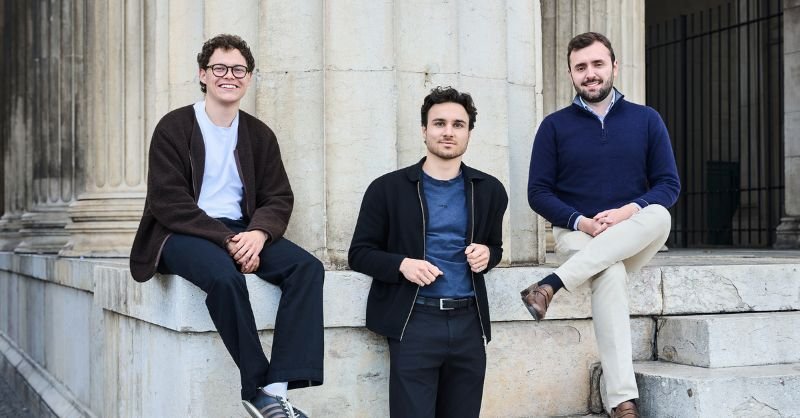
Vanagon Ventures was founded in 2023 and is led by three General Partners with a mix of venture, operating, and corporate innovation backgrounds. Axel Roitzsch is described as a serial entrepreneur with “full cycle” experience. Sandro Stark previously worked as a strategist at Microsoft and co-founded a parametric climate insurance company. Susanne Fromm, an INSEAD MBA alum, brings experience across corporate innovation, strategy, and technology investing.
The firm’s stated conviction is that the next wave of impactful European technology companies will be built by founders with deep expertise in established industries—using advanced technology to re-architect legacy systems rather than simply layering software on top.
Early portfolio signals
Vanagon Ventures said Fund I has already invested in several companies. These include Holy Technologies, an AI-enabled engineering company focused on high-performance manufacturing in Europe; ExoMatter, a German Aerospace Center spin-out offering an AI-powered R&D platform used by DAX customers; and The Landbanking Group, an AI-driven platform designed to measure, manage, and monetize natural capital—positioned as infrastructure for biodiversity and ecosystem integrity as an emerging asset class.
Other investments mentioned by the firm include glass-based data storage for immutable, sustainable archiving; AI visual inspection for “zero-defect” manufacturing; and AI-based demand forecasting for chemical and textile industries.
With a €20 million vehicle and a stated pre-Seed focus, Vanagon Ventures is positioning itself as a specialist backer for Europe’s most technical founders—seeking to fund the earliest steps of companies whose breakthroughs may take longer to validate, but could reshape strategic industries if they succeed.
Related