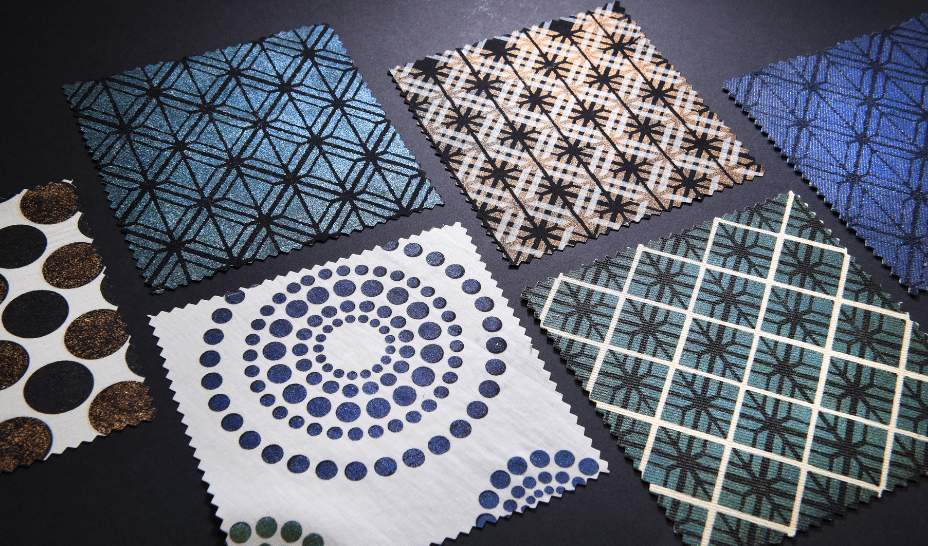
Sparxell secures €4.2 million to commercialise structural colour
Sparxell, a University of Cambridge spin-out developing bioinspired colour technology, has raised €4.2 million (about $5 million) in pre-Series A funding as it moves from pilots to commercial-scale manufacturing. The round was led by SWEN Capital Partners through its Blue Ocean 2 fund, with participation from Alpha Star Capital and Cambridge Enterprise.
The company says the new capital will help it replace conventional, petrochemical-derived dyes and pigments used across a global colourants market it estimates at roughly €40 billion. Dr Benjamin Droguet, Founder and CEO of Sparxell, said the financing marks a shift from validation to industrialisation. “Our technology isn’t just an alternative – it is here to stay because it delivers superior performance due to its nature-inspired features. This funding takes us from proof of concept to production and commercial launches,” he said.
From Cambridge lab to tonne-scale output
Founded in 2023 by Dr Benjamin Droguet and Professor Silvia Vignolini, Sparxell is positioning its platform as a way to create colour without relying on the chemical reactions and additives that dominate today’s dye and pigment supply chains. The company’s approach is based on structural colour—the optical phenomenon behind the vivid hues seen in butterfly wings—where colour results from micro- and nano-scale structures that reflect specific wavelengths of light.
In practice, Sparxell uses cellulose sourced from wood pulp to create cellulose crystals and assemble them into structures that produce targeted colours. The company says the resulting materials can be manufactured as pigment powders, inks, glitters, sequins and films, and are designed to be plastic-free, toxin-free and biodegradable.
The funding is expected to accelerate the company’s transition to industrial production, with tonne-scale manufacturing facilities targeted to be operational by 2026. That shift is crucial for adoption in industries such as textiles, where suppliers and brands typically require consistent volumes, stable pricing and certified performance before switching materials.
Investors cite environmental pressure and regulatory momentum
Backers framed the investment as a response to mounting pressure on brands and manufacturers to reduce hazardous substances in supply chains. Mélanie Le Guen, Investment Director for SWEN Capital Partners’ Blue Ocean strategy, said the technology aligns with the fund’s sustainability focus. “By reinventing colour through a bio-based, biodegradable approach, Sparxell offers a tangible response to a major environmental challenge while enabling global industries to transition toward safer and more sustainable practices,” she said.
Sparxell is also leaning into a shifting regulatory landscape. Dr Benjamin Droguet pointed to growing scrutiny of synthetic chemicals and persistent pollutants. He cited European momentum around restricting PFAS (“forever chemicals”), the EU’s microplastics rules, and renewed attention in the US to synthetic colour additives. While the company’s initial focus is textiles and fashion, it is also targeting cosmetics, packaging, coatings and automotive applications—categories where compliance and certification requirements can be demanding but where sustainability claims can influence purchasing decisions.
Textiles remain the first major battleground
The company is pitching its technology as a replacement for conventional dyes that can be water- and energy-intensive and may introduce pollutants into waterways. Sparxell points to estimates that the textile industry releases significant volumes of synthetic dyes into the environment each year, and argues that biodegradable cellulose-based pigments could improve end-of-life outcomes for coloured materials, including recycling and compostability pathways.
Unlike many synthetic dyes that can persist and complicate fibre-to-fibre recycling, Sparxell says its cellulose pigments are designed to integrate into circular systems. The company also claims performance advantages, stating that structural colour can deliver vivid, stable colour while reducing reliance on petroleum-based chemicals, heavy metals and certain mineral-based pigments.
Commercial steps: grants, collaborations and certification
The financing follows other signals of traction. Earlier this year, Sparxell secured a €1.9 million grant from the European Innovation Council (EIC). The company has also announced collaborations aimed at bringing products to market, including work with British luxury brand Patrick McDowell and a launch of plant-based textile inks with Positive Materials.
Chris Gibbs, Investment Director at Cambridge Enterprise, said the round will help the company scale a more sustainable alternative to incumbent colourants. “This investment is an important milestone in Sparxell’s development, enabling more sustainable colourants based on natural, biodegradable pigments delivering tangible environmental benefits as the technology scales,” he said, adding that the investor syndicate positions the company for international expansion.
Use of proceeds
Sparxell said the pre-Series A funds will be deployed across three priorities:
- Scaling manufacturing toward tonne-scale production
- Accelerating product certification for textiles, cosmetics and automotive applications
- Hiring across key roles, including business development
Alexandre Cadain, Co-Founder and Managing Partner at Alpha Star Capital, said the firm was attracted by the company’s “first principles” approach. “Instead of trying to retrofit sustainability into existing chemistry, they rebuilt colour from first principles using a natural structure,” he said.
Part of a broader European push into bio-based materials
Sparxell’s round lands amid steady European investment in bio-based colour and adjacent sustainable materials. Recent examples cited in the sector include Copenhagen-based Octarine Bio adding €5 million to its Series A in January 2026 for natural pigments, Denmark’s Cellugy raising €8.1 million in June 2025 to scale cellulose-based materials aimed at reducing microplastics, and Finland’s Fiberdom raising €3.5 million in April 2025 for plastic-free wood-fibre materials.
For Sparxell, the next 12 to 18 months will test whether structural colour can be manufactured reliably at industrial volumes and integrated into complex supply chains that demand repeatability, durability and strict compliance. If successful, the company could offer fashion and other industries a pathway to reduce chemical load and microplastic pollution without sacrificing performance—an increasingly central requirement as sustainability commitments move from marketing to measurable procurement standards.
Related