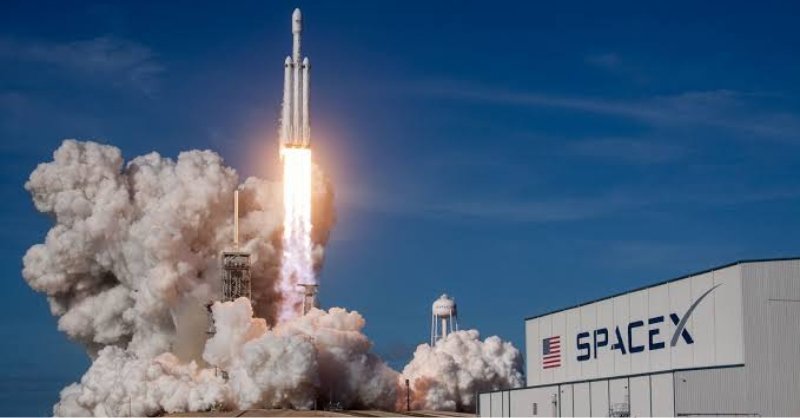
SpaceX explores Wall Street lineup for potential mega-IPO
SpaceX, the rocket and satellite company led by Elon Musk, is reportedly evaluating a group of major Wall Street banks for senior roles on a potential initial public offering that could become one of the largest listings in market history.
According to people familiar with the matter cited in media reports, the company is considering Bank of America, Goldman Sachs, JPMorgan Chase, and Morgan Stanley for top underwriting assignments. The talks are described as preliminary, and no final decisions have been made. The situation could still shift as the company weighs timing, structure, and market conditions.
Neither SpaceX nor the banks have publicly confirmed the discussions.
Morgan Stanley seen as a leading contender
Separate reporting in recent weeks has suggested Morgan Stanley may have an edge in the race for a lead role, in part due to its long-standing relationship with Musk and prior involvement in transactions linked to his business empire.
While the final underwriting roster remains uncertain, the presence of multiple top-tier banks underscores how significant any eventual SpaceX IPO would be for both public markets and the investment banking industry. A listing would not only raise substantial capital, but also set a benchmark for how large, strategically sensitive private companies transition to public ownership.
Why a SpaceX IPO would be unusually complex
An IPO for SpaceX would likely be far more complicated than a typical technology or industrial offering, given the company’s scale, business mix, and corporate structure.
SpaceX is already among the world’s most valuable private companies, driven by its launch business and the growth of Starlink, its satellite internet unit. Any move to public markets would require careful navigation of issues ranging from segment reporting and regulatory considerations to investor messaging around long-term capital intensity.
In addition, bankers would need to assess how to present the company’s diverse revenue streams—commercial launches, government contracts, and satellite broadband—while balancing the expectations of public shareholders with the operational realities of a company still investing heavily in next-generation space systems.
Reports point to an accelerated timeline
Although there is no official timetable, some reports indicate Musk is pushing for a faster process, with an IPO potentially targeted as early as July. Such a schedule would be aggressive for an offering of this size and visibility, particularly given the amount of preparation typically required for a company with SpaceX’s footprint.
Any acceleration would likely reflect a strategic calculus: tapping public markets to fund large-scale projects, strengthen the balance sheet, and create a more flexible capital base for continued expansion.
AI ambitions and energy-intensive infrastructure
One factor reportedly linked to the urgency is Musk’s growing emphasis on artificial intelligence. The reports say SpaceX has been exploring the concept of solar-powered, space-based data centers—an idea framed as a potential response to the enormous energy demands of modern AI systems.
The concept has drawn skepticism, reflecting both engineering challenges and questions about economic viability. Still, the idea fits a broader trend: technology leaders increasingly discuss orbital and alternative energy infrastructure as possible long-term solutions for scaling compute.
For SpaceX, even exploring such initiatives signals how the company’s ambitions may extend beyond launch services and satellite connectivity toward enabling future infrastructure for high-demand computing.
Potential links to funding needs at xAI
Reports also suggest that proceeds or financial flexibility associated with a SpaceX listing could indirectly support Musk’s other ventures, including xAI, his artificial intelligence company competing with major players such as OpenAI and Google.
While there is no confirmation that an IPO would be structured to fund external entities, investors and analysts often scrutinize how capital raised by a high-profile issuer could affect related businesses, especially when a founder has multiple large-scale projects running in parallel.
What happens next
For now, the reported bank discussions indicate preparation rather than a locked-in plan. Underwriting selections, valuation expectations, and the ultimate decision to go public could all change depending on market conditions, regulatory considerations, and internal priorities.
If SpaceX does proceed, the offering would likely draw extraordinary attention from institutional investors and retail traders alike, given the company’s role in the global space economy and the public fascination with Musk’s ventures. In that scenario, the IPO would not only be a major capital markets event—it would also serve as a referendum on how public investors price long-duration, capital-intensive innovation at massive scale.
Related