Runeasi secures €1M to accelerate international growth
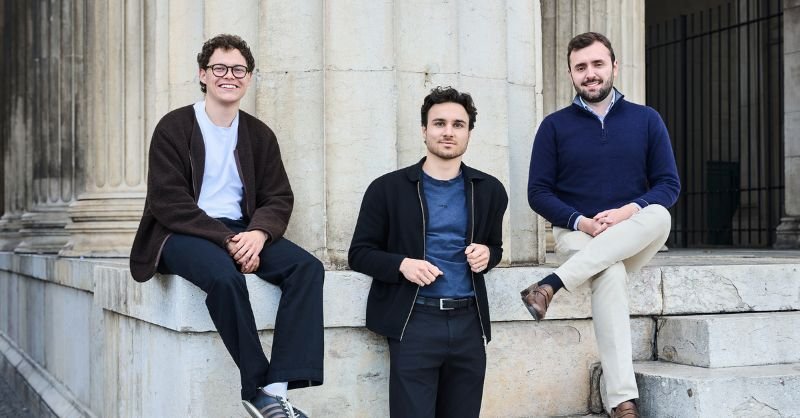
Belgian healthtech startup Runeasi, a KU Leuven spinout focused on AI-driven movement analysis, has raised €1 million in fresh funding to scale its platform globally. The round was led by Smarter Ventures, with continued participation from Freshmen Fund and Gemma Frisius Fund. The company’s founders also invested, alongside Silicon Valley angel investor Sean Gourley, adding an international component to the Leuven-based company’s investor base.
The new capital will be used to support Runeasi’s next phase of growth, with an emphasis on international expansion—particularly in the United States, which the company describes as its fastest-growing market. At the same time, Runeasi said it will continue investing in its home market of Belgium, where it has built long-standing relationships with customers in clinical and sports-performance settings.
U.S. expansion prioritized while Belgium remains a core market
Chief Executive Officer Kurt Schütte said the funding will help the company expand at a faster pace while maintaining its Belgian footprint.
“We are proud and grateful for the continued trust of our existing partners and the enthusiasm of several new investors,” Schütte said. “This funding enables us to speed up our next growth phase. We will be able to expand internationally at a faster pace, with a particular focus on the United States, where we see the strongest demand and fastest growth. At the same time, we remain committed to the Belgian market, where we have built strong customer relationships over many years.”
The company did not disclose valuation or detailed allocation of the proceeds, but positioned the raise as a growth round designed to scale commercial reach and meet rising demand for accessible, data-driven movement assessment tools.
From running analysis to broader athletic performance
Runeasi said 2025 marked a milestone year, highlighted by the launch of a new Jumping Module. The addition expands the platform beyond running analysis into assessments of explosiveness and reactivity—metrics relevant not only to runners but also to athletes in sports where jumping and rapid changes of direction play a central role.
Alongside product expansion, the company has also increased its role in professional education. It said it has built out podcasts and accredited training programs for physiotherapists in Europe and North America, including collaborations with Physiotutors. This education strategy can serve both as a customer acquisition channel and a way to standardize how practitioners interpret and apply biomechanical insights.
How Runeasi works
Founded by Kurt Schütte and Tim Op De Béeck, Runeasi provides a platform that uses an AI-powered motion sensor to capture biomechanical data while a person runs or jumps. Within minutes, the system generates a personalized report intended to be easily understood and actionable for professionals, with use cases spanning injury prevention, rehabilitation programs, and performance improvement.
A key part of the company’s pitch is accessibility. Rather than relying on complex multi-camera setups or costly lab environments, Runeasi aims to bring high-quality movement analysis into everyday clinical, coaching, or retail settings. The company positions this approach as a way to widen access to advanced biomechanics—making it feasible for physiotherapy practices, coaches, and specialty running stores to perform assessments without major capital expenditure.
Traction across 40+ countries and 50,000+ analyses
Runeasi said it is active in more than 40 countries and has been used for over 50,000 running analyses to date. The company also noted that the United States is currently its largest market, aligning with its stated plan to prioritize U.S. expansion with this new funding.
Beyond clinical and coaching use cases, the platform is also used by major sports footwear brands, according to the company. In that context, it can support faster and more objective product testing, while also strengthening scientific validation processes—an increasingly important area for performance footwear makers competing on claims around efficiency, injury reduction, and comfort.
Why investors backed the round
Smarter Ventures Managing Partner Anton Loeffen said the company fits the firm’s thesis around AI businesses that combine domain expertise with proprietary data and strong customer value.
“Runeasi builds exactly the type of software we like to invest in: a strong combination of deep domain expertise, proprietary data, and innovative AI,” Loeffen said. “Their product is intuitive to use and mission-critical for customers. This perfectly aligns with our belief that the most successful AI companies create a flywheel that drives sustainable growth and innovation.”
Kristian de Lange, also a Managing Partner at Smarter Ventures, pointed to both product quality and team execution as key reasons for investing.
“As an experienced runner, I was immediately impressed by the product. As an investor, it was the strength of the team that truly stood out,” de Lange said. “The founders have a sharp understanding of their customers, make thoughtful product decisions, and are driven to learn and improve every day.”
What to watch next
With new capital in place, Runeasi’s near-term progress will likely be measured by its ability to deepen penetration in the U.S. market while maintaining momentum across existing geographies. The company’s expansion beyond running into jumping analysis also signals a broader ambition: to become a standardized assessment layer for multiple sports and rehabilitation contexts, delivered through an accessible sensor-and-software workflow.
If Runeasi can continue to scale usage while strengthening its data advantage and training ecosystem, it may be positioned to compete in a growing segment where practitioners want lab-grade insights without lab-grade complexity.
Related