Resolve AI raises $125M Series A, reaches $1B valuation
San Francisco-based Resolve AI has raised $125 million in a Series A financing round, lifting the company’s valuation to $1 billion and making it one of the latest AI-focused unicorns targeting enterprise software reliability. The round was led by Lightspeed Venture Partners, with participation from existing investors Greylock Partners, Unusual Ventures, and Artisanal Ventures.
The new capital brings Resolve AI’s total funding to more than $150 million, according to the company. It plans to use the proceeds to accelerate product development, expand engineering and go-to-market hiring, and meet growing demand from large enterprise customers adopting AI to manage increasingly complex production environments.
What the company builds: an AI “production engineer”
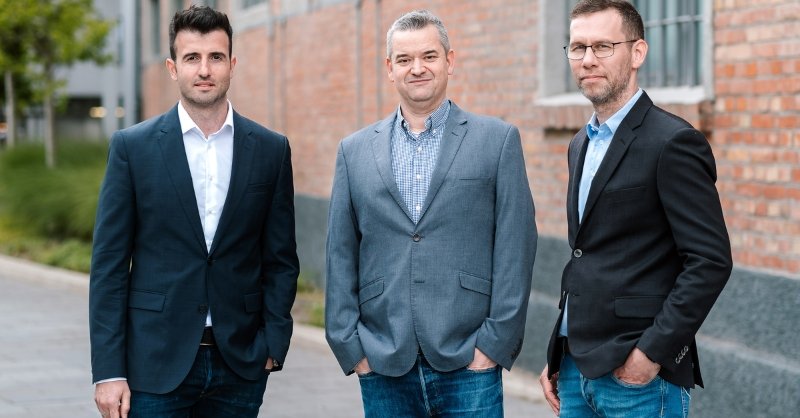
Resolve AI was founded by observability veterans Spiros Xanthos and Mayank Agarwal, both early contributors to OpenTelemetry, a widely used open-source standard for collecting telemetry data such as logs, metrics, and traces. The founders have also built and sold previous companies to Splunk and VMware, experience that positions the startup at the intersection of enterprise infrastructure, monitoring, and incident response.
The company describes its product as an AI-powered “production engineer” designed for modern software teams, with a focus on autonomous Site Reliability Engineering (SRE). In practice, the platform monitors complex cloud and containerized environments—including deployments running on AWS and Kubernetes—investigates production incidents, identifies root causes, and recommends fixes. In some cases, the system can also execute remediations automatically, while keeping human operators in control of final decisions.
Rather than relying on static rules or pre-set playbooks, Resolve AI says it builds a live knowledge graph that reflects how a customer’s infrastructure actually behaves in real time. It then uses AI agents to reason across multiple data sources—such as logs, metrics, deployments, and configuration changes—to connect symptoms to causes and propose actions.
Why autonomous SRE is emerging as a major enterprise use case
As companies scale their software systems, production reliability has become both more critical and harder to maintain. Modern applications often span microservices, third-party APIs, distributed databases, and layered cloud services. When something breaks, the resulting outages can cascade across teams and tools, turning incident response into a high-cost, high-stress process that pulls engineers away from product work.
In many organizations, diagnosing a major outage still requires large groups of engineers to coordinate across dashboards, alerts, and chat channels—often in long incident calls. That operational overhead can slow development velocity, increase downtime costs, and contribute to burnout among on-call staff. The pitch behind AI production engineering is that systems can shoulder more of the investigation and triage work, narrowing the time-to-diagnosis and reducing the number of people required to resolve incidents.
“In most companies, the hardest part of software engineering isn’t writing code. It’s running production,” said co-founder Spiros Xanthos in prepared remarks. He added that Resolve AI launched a little over a year ago to help teams debug and operate production systems, and that its agents are already running in production at large technology and financial services companies.
Early customer claims point to measurable incident-time reductions
Resolve AI says customers are already seeing measurable improvements in incident response efficiency. Among the examples it cited, Coinbase reported a 72% reduction in time spent investigating critical incidents, while Zscaler reduced the number of engineers required per incident by 30%.
The company also lists DoorDash, Salesforce, MongoDB, and MSCI among its customers, signaling adoption across both high-scale consumer platforms and enterprise-heavy sectors where outages can carry material financial and reputational risk.
While such metrics are typically self-reported and can vary based on incident types and internal processes, they reflect a broader trend: enterprises are increasingly willing to deploy AI systems not just for customer-facing features, but also for internal operations, where productivity gains can translate quickly into cost savings and improved uptime.
How the company plans to use the funding
With the new round, Resolve AI said it will focus on three priorities: advancing its AI research for software engineering, deepening product capabilities across the production stack, and expanding customer support for global enterprise deployments.
Today, the platform works alongside engineers through familiar workflows, integrating with tools such as Slack, Microsoft Teams, and the terminal. The long-term ambition is to shift from reactive incident handling toward prevention—detecting signals early and reducing the likelihood that users ever notice a production issue.
Co-founder Mayank Agarwal framed the company’s strategy around operational excellence as a competitive advantage in the AI era. “The teams that win in the AI era won’t just be the ones that ship code fastest,” he said. “They’ll be the ones who can run what they build reliably at scale.”
Market context: reliability becomes a battleground for AI-native tooling
The unicorn valuation underscores investor conviction that AI agents will become a core layer in enterprise IT operations, particularly as systems grow more distributed and difficult to manage with traditional monitoring and rule-based automation. The bet is that reliability engineering—often treated as a necessary cost center—can be transformed into a strategic function when AI can reduce toil, shorten outages, and free engineers to build.
For Resolve AI, the next test will be scaling from early deployments into broader enterprise standardization, where security, governance, auditability, and integration depth often determine whether a tool becomes mission-critical. If the company can maintain performance across heterogeneous infrastructures and high-stakes environments, it may help define what autonomous SRE looks like in large organizations.
With $125 million in fresh capital and a growing roster of marquee customers, Resolve AI is positioning itself to be a central player in the fast-developing market for AI-driven production engineering.
Related