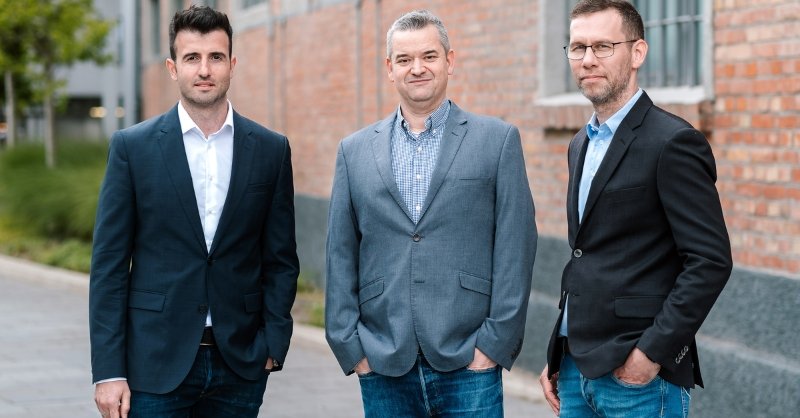
Parloa lands €310 million Series D in rapid follow-on round
Parloa, a Berlin-based developer of enterprise customer AI agents, has raised €310 million (about $350 million) in a Series D financing, just seven months after closing its Series C. The unusually fast return to the market highlights the accelerating pace of funding in customer-facing AI, as enterprises look to automate support, service, and contact-center workflows.
The company describes its product as an enterprise-grade customer AI agent platform—software designed to handle customer interactions across channels and integrate with existing business systems. The latest round positions Parloa among the better-capitalized European players building AI-driven customer service tools aimed at large organizations.
Why the timing stands out
Late-stage rounds such as Series D are typically associated with scaling revenue, expanding internationally, and preparing for longer-term outcomes such as a public listing or strategic acquisition. Raising a Series D only months after a Series C can signal several dynamics at once: strong investor interest, a rapidly expanding market opportunity, and a desire to secure capital ahead of competitors.
In the enterprise AI category, speed often matters. Companies deploying customer AI agents are competing not only on model performance, but also on security, reliability, integrations, and the ability to prove measurable returns. A larger balance sheet can help a vendor hire specialized engineering talent, invest in compliance and governance, and build partnerships with major platforms and systems integrators.
Enterprise customer AI agents move into the mainstream
Customer AI agents are increasingly positioned as the next step beyond traditional chatbots and scripted IVR systems. Instead of relying on fixed decision trees, modern agent platforms aim to interpret intent, retrieve relevant information, and execute tasks—such as updating an account record, processing a request, or escalating to a human agent when needed.
Enterprises, however, have been cautious adopters. Many organizations require clear controls around data access, auditability, and brand-safe responses. As a result, vendors building in the enterprise space have focused on features such as role-based permissions, monitoring, analytics, and integration with CRM and ticketing systems. Funding at this scale suggests investors believe the market is maturing and that large customers are ready to expand deployments from pilots to broader rollouts.
What companies want from AI agents
In practical terms, enterprises evaluating customer AI agent platforms tend to focus on a few core outcomes:
- Cost reduction by deflecting repetitive inquiries and improving first-contact resolution.
- Better customer experience through faster response times and consistent answers.
- Agent productivity by assisting human representatives with summaries, suggested actions, and next-best responses.
- Governance to manage risk, including guardrails, testing, and compliance requirements.
These pressures have intensified as customer expectations rise and labor costs remain elevated in many markets. Vendors that can demonstrate reliable automation—without compromising security or accuracy—stand to benefit.
What the new capital could support
Parloa has not detailed how the Series D proceeds will be allocated in the brief announcement, but companies at this stage typically use new funding to accelerate growth initiatives. Potential priorities include expanding go-to-market teams, entering new geographies, deepening product capabilities, and investing in enterprise readiness such as certifications, uptime, and support.
For AI agent platforms specifically, capital can also support higher infrastructure and model-related costs, including experimentation with model providers, fine-tuning, evaluation, and building tools to manage performance over time. As enterprises demand predictable behavior and measurable outcomes, ongoing testing and monitoring become as important as initial deployment.
European AI funding momentum
The round adds to a broader narrative of increased attention on European AI companies, particularly those targeting enterprise use cases with clear monetization paths. While consumer AI applications often scale rapidly, enterprise deployments can be stickier once embedded into workflows—creating the potential for durable recurring revenue if a vendor becomes a core systems layer.
At the same time, competition is intense. Global software companies and well-funded startups are racing to build customer service automation stacks, and many enterprises are weighing whether to buy an end-to-end platform or assemble capabilities from multiple vendors. A large Series D can help Parloa strengthen its position as a strategic supplier rather than a point solution.
What to watch next
Following a rapid Series D, investors and customers will likely look for signals of sustained momentum: expanded customer adoption, deeper integrations with enterprise systems, and evidence that AI agents can deliver consistent quality at scale. The broader market will also watch how vendors address risk management, including hallucination mitigation, data security, and regulatory compliance.
For Parloa, the funding provides financial runway to compete in a fast-moving category where product maturity and enterprise trust can be as decisive as raw model capability. The next phase will hinge on execution—turning capital into deployments that prove customer AI agents can reliably handle real-world service workloads.
Related