Liom raises €13.9M to push needle-free glucose monitoring
Liom, a Swiss health-tech startup developing a calibration-free, needle-free glucose monitoring wearable, has raised €13.9 million to extend its Series A round to €40.8 million. The company says the additional capital will be used to accelerate development and move closer to bringing lab-grade Raman spectroscopy into a consumer-friendly smartwatch form factor, with an ambition to reach the market by 2028.
The financing underscores sustained investor interest in non-invasive glucose monitoring—one of the most sought-after goals in consumer health technology and diabetes care. For years, the promise of painless, continuous monitoring has attracted major corporate R&D efforts, but commercial success has remained elusive due to technical constraints, accuracy challenges, and the complexity of measuring glucose reliably through skin.
What Liom is building
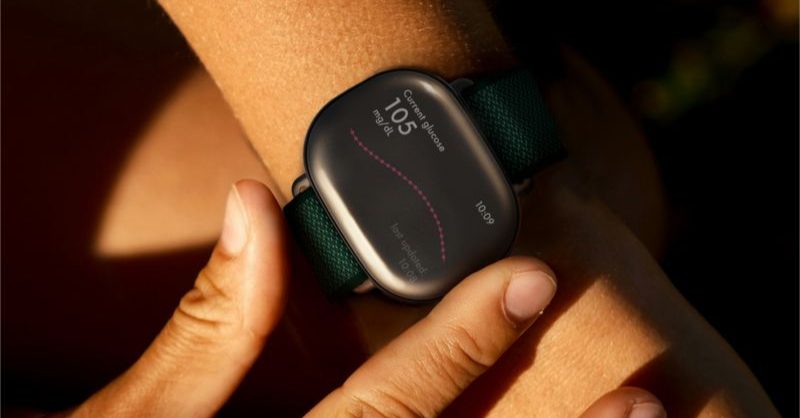
Liom is targeting a wearable that could measure glucose levels without needles and without the periodic calibration steps that can be required by some sensing approaches. The company’s core bet is on translating Raman spectroscopy—an optical technique used in laboratory settings to identify molecules based on how they scatter light—into a compact, wearable system suitable for everyday use.
In practical terms, that means shrinking sophisticated optical components, improving signal processing, and maintaining medical-grade performance in a device that can operate continuously on a wearable power budget. If achieved, such a device could broaden access to continuous glucose insights beyond current sensor-based systems that typically rely on minimally invasive inserts.
Why calibration-free, needle-free matters
Non-invasive glucose monitoring has long been viewed as a potential step-change for both people living with diabetes and the wider population interested in metabolic health. A calibration-free approach, if validated, could reduce friction for users and potentially improve adherence by simplifying setup and ongoing use.
However, the bar is high. Glucose is present in relatively low concentrations compared with other biological signals, and skin, hydration, temperature, motion, and individual physiology can introduce noise. Optical techniques must isolate glucose-related signals reliably across a wide range of real-world conditions. That is part of why many non-invasive concepts have struggled to reach robust clinical performance.
How the new funding may be used
While Liom did not detail a line-item breakdown in the announcement summary, a Series A extension of this size typically supports several parallel workstreams:
- Engineering to miniaturize optical hardware and integrate it into a wearable design.
- Data science to improve signal extraction, modeling, and individualized performance without user calibration.
- Clinical validation to test accuracy across populations and conditions, a prerequisite for regulatory pathways.
- Manufacturing readiness to ensure components and assembly methods can scale beyond prototypes.
The company’s stated goal of reaching smartwatch form by 2028 implies a multi-year roadmap that may include iterative prototypes, controlled clinical studies, and eventual regulatory submissions depending on intended claims and markets.
A crowded field with high stakes
The market opportunity for continuous glucose monitoring and broader metabolic tracking has expanded rapidly, driven by rising diabetes prevalence and growing consumer interest in preventative health. At the same time, competition is intense. Established medical device makers continue to improve conventional sensor-based systems, while a range of startups pursue optical, electromagnetic, and other non-invasive techniques.
Liom’s differentiation, as framed in its announcement, centers on bringing lab-grade Raman measurement into an everyday wearable while avoiding calibration. If the company can demonstrate accuracy that stands up to clinical scrutiny, it could carve out a meaningful position in a market where trust and performance are critical.
What to watch next
For investors and industry observers, the next milestones will likely revolve around evidence: prototype performance, peer-reviewed results, and the design of clinical studies that compare readings against established reference methods. The transition from a promising optical signal in controlled settings to consistent readings on-wrist during daily life is often where non-invasive approaches face their toughest tests.
Another key question is how Liom intends to position the product—whether as a medical device, a wellness tracker, or a platform that could serve both markets with different feature sets. Regulatory requirements and time-to-market can vary significantly depending on claims, and many companies in the space have explored staged approaches that start with wellness insights before pursuing medical indications.
Bottom line
With a €13.9 million raise extending its Series A to €40.8 million, Liom is signaling confidence in its ability to advance a calibration-free, needle-free glucose monitoring wearable built on Raman technology. The company is aiming for a smartwatch-ready form factor by 2028, a timeline that suggests significant engineering and validation work ahead in one of health tech’s most technically demanding categories.
Related