Kembara raises €750M to tackle Europe’s deeptech scale-up gap
Kembara, a newly formed European deeptech investment firm, has raised €750 million toward a planned €1 billion growth fund, positioning it as the largest deep-tech-focused growth vehicle in Europe. The fund aims to address a persistent bottleneck for European deeptech companies: securing large late-stage rounds—often Series B and C—needed to scale globally.
Europe generates close to 30% of the world’s deeptech breakthroughs, according to figures cited by the firm, but comparatively few companies go on to raise the €50 million to €100 million rounds that can propel them into global leadership. Many European venture funds remain too small to lead those financings, leaving promising startups to seek capital abroad, accept acquisition offers earlier than desired, or relocate to markets with deeper pools of growth funding.
Backers and investment focus
Among the fund’s cornerstone commitments is €350 million from the European Investment Fund (EIF), alongside other institutional and strategic backers. Kembara said it will invest across advanced computing, AI, quantum computing, robotics, clean energy, and space infrastructure—sectors that typically require long development cycles, specialized talent, and significant capital for manufacturing and regulatory execution.
The firm plans to write checks of up to €100 million per company, a size that reflects its emphasis on growth-stage financing rather than early seed rounds. The strategy is designed to keep European intellectual property and industrial capacity anchored locally by ensuring that late-stage capital is available without forcing companies to rely on non-European funding sources.
Founders pitch a “second renaissance”
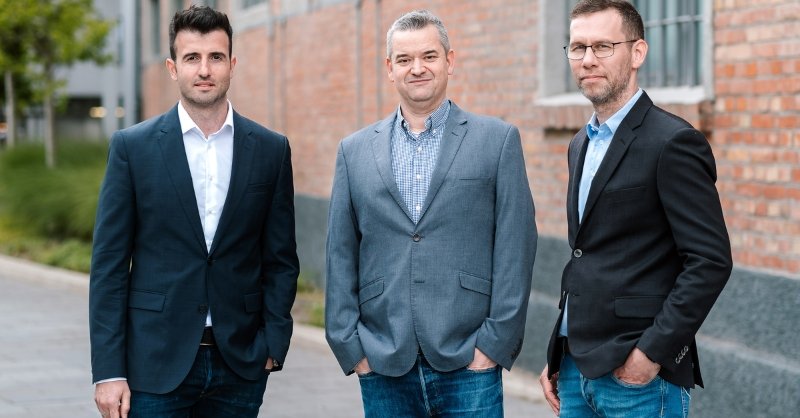
Javier Santiso and Yann de Vries founded Kembara in 2023. Santiso previously founded Mundi Ventures and has held roles at Telefónica and Khazanah. De Vries is a former Atomico partner and an early executive at Lilium. In describing the firm’s ambition, Santiso framed the mission as funding Europe’s “second Renaissance,” likening the role of long-term capital in innovation to the historical patronage of the Medici.
Kembara says its partners bring more than a century of combined experience in deeptech and growth investing, with backgrounds spanning venture capital, company building, and scaling complex technologies through regulatory and manufacturing hurdles.
Team and track record
In addition to Santiso and de Vries, the leadership group includes Robert Trezona (formerly IP Group), Pierre Festal (Promus Ventures), and strategic advisor Siraj Khaliq, co-founder of The Climate Corporation and a former Atomico partner.
Collectively, the partners have been associated with companies and projects including SpaceX, Palantir, PsiQuantum, OpenAI, Lilium, Graphcore, Ceres Power, and Anduril, according to the firm. The emphasis on deeptech specialization is intended to differentiate Kembara from generalist venture funds, particularly in sectors where execution depends on technical diligence, supply-chain planning, and policy engagement.
What the fund plans to do next
With its first close completed, Kembara is targeting a final close at €1 billion by 2026. The firm expects to back roughly 20 companies, focusing on those it considers potential category leaders capable of competing globally from a European base.
Beyond capital, Kembara says it wants to build a Europe-wide platform linking founders with industrial partners, policymakers, and strategic investors. The goal is to accelerate commercialization and adoption—areas where European deeptech has often struggled despite strong research output. By connecting startups to major customers, manufacturing expertise, and regulatory pathways, the firm argues it can help reduce time-to-market and improve the odds of building durable European champions.
Diversity questions remain unanswered
While the fund’s size and sector focus have drawn attention, questions remain about its approach to diversity and inclusion. The publication that first reported the fund said it contacted Kembara for comment on its diversity strategy but did not receive a response by the time of publication.
The issue has become increasingly prominent across European venture capital, where critics have long argued that capital allocation does not reflect the diversity of founders building companies. As growth funds become larger and more influential in shaping which startups reach global scale, scrutiny of hiring, governance, and investment decision-making has intensified.
Why it matters for Europe’s deeptech ambitions
Kembara enters the market at a moment when European policymakers and investors are seeking to strengthen regional competitiveness in strategic technologies. Deeptech companies—particularly those in AI, quantum, energy systems, and space—are increasingly viewed not just as commercial opportunities but as critical infrastructure for economic resilience and security.
If Kembara succeeds in consistently leading €50 million-plus rounds, it could help narrow a long-standing gap between Europe’s research strength and its ability to build global-scale companies. But the firm’s impact will ultimately be judged by whether it can deliver both returns and enduring industrial outcomes—keeping high-value technologies, talent, and manufacturing capacity rooted in Europe while competing in markets where capital and scale often determine the winners.
Related