Hurree CEO warns 2026 will test whether AI can pay for itself
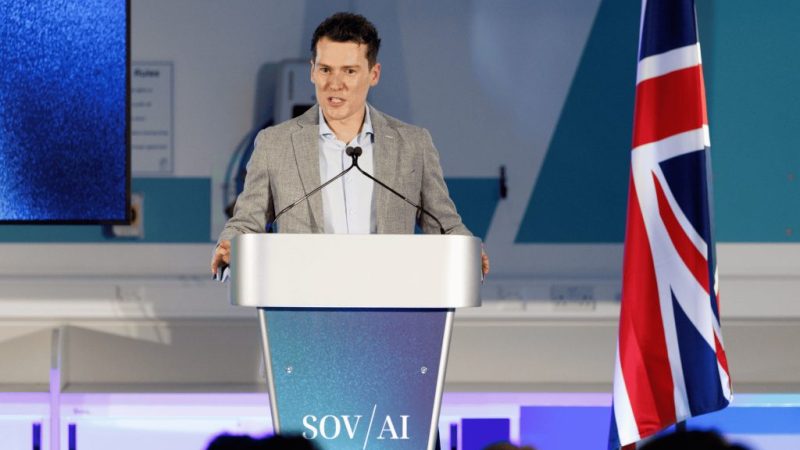
After two years of rapid experimentation and headline-chasing, the next chapter for artificial intelligence will be less glamorous and far more demanding, according to the CEO of Hurree. In remarks framed as “from FOMO to payback,” the executive argued that 2026 will usher in AI’s “hard hat” phase—an era when organizations stop funding broad pilots and start insisting on deployments that can be tied directly to revenue, cost reduction, or measurable productivity gains.
The core message is simple: AI initiatives that cannot demonstrate financial impact will struggle to survive tightening budgets and more skeptical boards. For vendors and buyers alike, the CEO said, success will depend on moving beyond proofs of concept and into disciplined operational rollouts with clear ownership, governance, and metrics.
From experimentation to accountability
In the CEO’s view, the early wave of enterprise AI was fueled by urgency and fear of falling behind. Many teams launched pilots in parallel—chatbots, content tools, analytics add-ons—often without a clear plan for data readiness, compliance, or how results would be measured. That “FOMO” phase, the CEO said, helped organizations learn quickly, but it also created a backlog of half-finished projects and unclear returns.
The “hard hat” framing is meant to signal a shift to construction-mode execution: fewer experiments, more production systems. In practical terms, that means defining exactly what a model is expected to improve, who is responsible for outcomes, and how performance will be tracked over time. The CEO positioned 2026 as the year when AI stops being treated as a novelty and starts being managed like any other revenue-impacting capability.
Revenue impact becomes the benchmark
Central to the CEO’s argument is the idea that AI will increasingly be judged by whether it influences top-line results, not just whether it generates impressive demos. That may include improving conversion rates, lowering customer acquisition costs, reducing churn, accelerating sales cycles, or enabling new product features customers will pay for.
In the CEO’s telling, the organizations that win in 2026 will be those that connect AI to a small set of measurable business outcomes and then build repeatable processes around them. Instead of “we deployed AI,” the narrative becomes “we increased qualified leads by X%” or “we reduced support resolution time by Y%,” with governance and reporting that stand up to scrutiny.
What the “hard hat” phase changes for companies
Budgets and procurement get tougher
The CEO predicted more rigorous procurement standards as companies reassess spending. Buyers will ask for evidence of ROI, clearer pricing tied to usage and value, and stronger commitments on security and compliance. AI tools that are difficult to audit or quantify may face longer sales cycles or be replaced by platforms that integrate more cleanly into existing workflows.
Operational readiness matters as much as model quality
While model performance remains important, the CEO emphasized that the operational side—data quality, access controls, monitoring, and human oversight—will determine whether AI can scale safely. In the “hard hat” phase, the winners will be those who treat AI as an ongoing system requiring maintenance, not a one-time installation.
Governance becomes a competitive advantage
As organizations move from pilots to production, governance is likely to become more standardized. The CEO highlighted the need for clear policies on what data can be used, how outputs are validated, and how risk is managed. In this environment, strong governance is not just compliance—it can speed adoption by building trust internally and externally.
Implications for AI vendors: outcomes over optics
The CEO’s comments also serve as a challenge to AI vendors. In 2026, marketing narratives may matter less than the ability to help customers implement AI in a way that is measurable and repeatable. Vendors will be pressured to provide better tooling for analytics, reporting, and lifecycle management—features that help customers prove impact, not just generate content or automate tasks.
For companies like Hurree, which operate in the broader AI and analytics ecosystem, the transition could reward platforms that can demonstrate how AI outputs translate into business decisions and financial results. The CEO suggested that the market will increasingly favor products that integrate with existing data stacks and provide transparent performance indicators.
Why 2026 could be a turning point
The CEO’s forecast reflects a broader reality: many enterprises are reaching the point where they must decide which AI initiatives to scale and which to sunset. Early enthusiasm helped unlock budgets, but it also created expectations. As macroeconomic uncertainty persists and executives demand discipline, AI programs will need to compete with other investments on the same scorecard—profitability, efficiency, and growth.
That does not mean AI adoption is slowing. Instead, the CEO’s argument suggests it is maturing. The “hard hat” phase implies a more practical, less speculative market where organizations invest in AI because it works, not because it trends.
What to watch next
Going into 2026, the CEO expects a clearer divide between AI projects that are tightly aligned with business priorities and those that remain experimental. Investors and boards are likely to press management teams for concrete milestones, while customers will demand reliability and accountability from vendors.
In the CEO’s words, the era of AI as a headline generator is ending. The next phase will reward teams that can show payback—turning AI from a talking point into an engine for revenue and operational performance.
Related