Gardia lands €8.5M Series A to scale senior safety tech
Gardia, a Germany-based healthtech startup building an AI-powered emergency wristband for older adults, has raised €8.5 million in Series A funding to expand across the DACH region and move into additional international markets. The round was led by Peak, with participation from amberra and butterfly & elephant, alongside existing backers and business angels including BONVENTURE, DvH Ventures, and Beurer.
The company said the new capital will be used to deepen its B2B footprint with healthcare and care-service providers, while also accelerating geographic rollout. The funding comes as European health systems face growing pressure from an ageing population, rising care costs, and a shortage of professional caregivers.
Built around a simple problem: falls and delayed help
Falls are among the most common and dangerous incidents affecting older adults, often leading to long recovery periods, reduced independence, and, in severe cases, an inability to call for help. Gardia is positioning its product as a practical response to a persistent gap in emergency support: many seniors live alone, may not carry phones consistently, or struggle with devices that are difficult to operate in a crisis.
According to the company, existing solutions frequently fall short because they depend on smartphones, only work at home, or are not designed for the physical and cognitive needs of older users. Gardia says its system is designed to be worn consistently and to function in real-world conditions, indoors and outdoors.
Founders with a personal mission
Gardia operates under microsynetics GmbH, founded in 2019 and based in Soest, North Rhine-Westphalia. The company employs more than 30 people and is led by co-founders CEO Marlon Besuch and CTO Michael Hummels.
CEO Marlon Besuch brings more than a decade of experience spanning health technology and electronics, including prior roles in finance and purchasing in the electronics industry. CTO Michael Hummels oversees technical development, including embedded systems and the company’s AI architecture, drawing on more than 10 years of experience in embedded systems, artificial intelligence, and R&D leadership.
The founders have tied the company’s origin to personal experiences with severe fall incidents in their families—events that highlighted the risks associated with delayed assistance after a fall.
How the wristband works—and why it’s different
Gardia has developed a discreet emergency wristband that automatically detects falls without requiring a smartphone. The company builds its hardware, software, and detection intelligence in-house, aiming to optimize reliability and ensure tighter integration between sensors, algorithms, and connectivity.
The wristband combines multiple technologies for localisation and connectivity, including GPS, cellular, WLAN, and Bluetooth. In an emergency, it can connect users to a 24/7 response centre operated by Bosch, following predefined escalation procedures designed to speed up and standardize response.
Gardia says it has reached a five-figure active user base across the DACH region. A key factor behind adoption is that the system is fully reimbursable by German health insurance, which reduces out-of-pocket costs for seniors and their families and can support retention.
Beyond detection, the company is emphasizing usability and product design. The wristband is positioned as non-stigmatising and simple to operate, with a battery life of up to 21 days—a specification intended to increase the likelihood that users keep the device on consistently.
Europe’s ageing population sharpens demand
Gardia is scaling at a time when demographic trends are reshaping healthcare priorities. The company points to an estimated 97 million people aged 65 or older in the European Union today, a figure expected to exceed 110 million by the mid-2030s.
In Germany, the company notes that 96% of seniors live in private households, reflecting a strong preference to age at home even as the supply of professional care workers tightens. Falls, meanwhile, remain a widespread risk: Gardia cites an estimated 5.7 million falls per year among people over 65 in Germany alone, with delayed assistance increasing the probability of severe injury and long-term care dependency.
For healthcare systems, those dynamics translate into higher downstream costs—from emergency care to rehabilitation and long-term support—making prevention and rapid response tools a growing priority.
Strategic partnerships widen distribution
Two partnerships stand out in Gardia’s go-to-market approach. First, the company’s collaboration with Bosch provides the 24/7 emergency response infrastructure, connecting users to trained specialists when incidents occur.
Second, the involvement of Beurer—a global consumer health products provider—extends distribution through an established retail network spanning more than 100 countries. The company views this as a lever to increase visibility among families seeking safety solutions for ageing relatives, while it continues to build B2B relationships with care providers and healthcare organizations.
Team and hiring focus
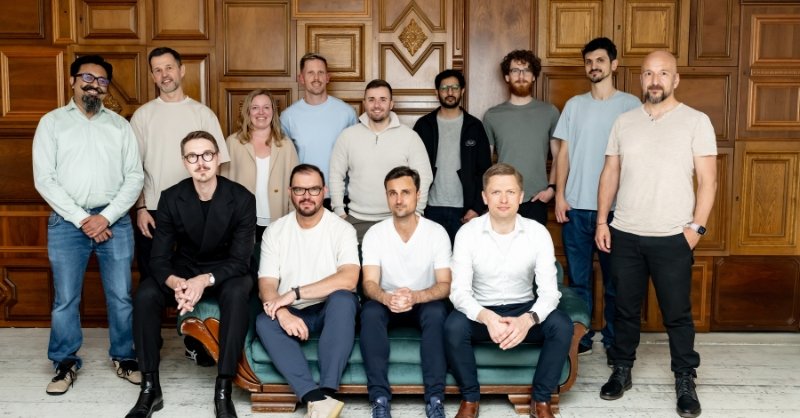
On workforce composition, Gardia describes an interdisciplinary team of 36 specialists across research, hardware and software engineering, data science, sustainability, and management, with roughly 20% of employees coming from outside Germany. The company also says it is prioritising diversity in hiring, including efforts to increase the representation of women and people from varied backgrounds.
What the funding signals
The €8.5 million raise underscores continued investor interest in practical, reimbursable healthtech products that address structural pressures in European care. If Gardia can maintain reliability at scale—and expand reimbursement and provider partnerships beyond Germany—its wristband could become a broader platform for independent living support as Europe’s population ages.
Related