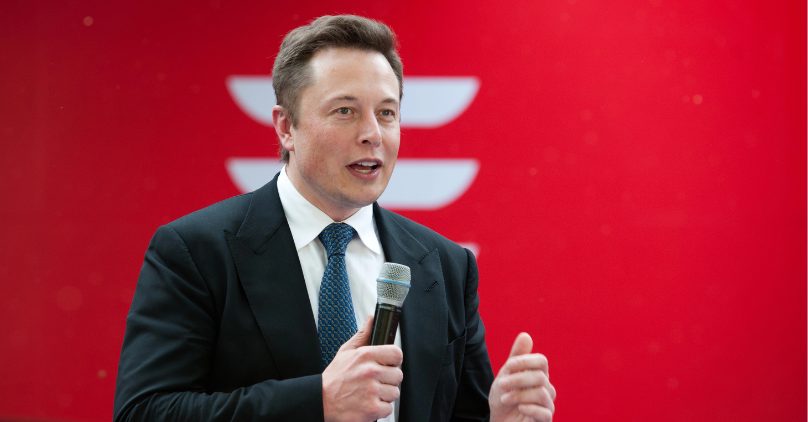
Elon Musk folds xAI into SpaceX as AI costs soar
Elon Musk has merged his artificial intelligence startup xAI into SpaceX, linking two of his largest private businesses as the AI venture faces intensifying financial pressure from the high cost of building and operating advanced computing infrastructure.
In comments tied to the merger, Musk argued the combination could accelerate plans to build “orbital data centres”, suggesting that space-based computing and energy systems could one day provide a lower-cost path to powering frontier AI. Industry analysts, however, said such ambitions remain speculative and far from commercial reality. In the near term, they see the transaction as primarily a financing and capital-access move for xAI.
Why the merger is happening now
The deal comes as the AI sector enters a capital-intensive phase dominated by spending on data centres, chips, and energy infrastructure. Competing labs and platform companies—including OpenAI, Google, and Anthropic—have been raising and deploying vast sums to secure compute capacity and reduce dependence on scarce high-end hardware.
Against that backdrop, xAI has been attempting to scale quickly, but at a steep cost. Reports cited in the source material indicate the company burned roughly $9.5 billion in the first nine months of 2025. While Musk recently raised about $20 billion for xAI at a valuation around $230 billion, spending has continued to outpace revenue, raising questions about how long the company can fund expansion at its current rate.
By folding xAI into SpaceX, Musk effectively connects the AI business to a larger and more established capital base. SpaceX is widely viewed as one of the most valuable private companies in the world, with a track record of attracting major investors and financing large, long-horizon projects—an important advantage in a compute arms race where cash flow timing can be uncertain.
SpaceX IPO speculation adds a second layer
The merger also lands amid ongoing market speculation that SpaceX is preparing for a public listing that could value the company at up to $1.5 trillion (roughly €1.4 trillion). Reports referenced in the source suggest the company could seek to raise as much as $50 billion in an IPO.
Analysts say combining xAI with SpaceX could make the overall story more compelling to public-market investors, especially while enthusiasm for AI remains elevated. Tim Farrar, president of TMF Associates, was quoted as saying that investors are currently willing to commit tens of billions of dollars to AI companies, but that window may not remain open indefinitely. The implication: raising large sums may be easier now than later, making timing a key strategic factor.
What filings show
Public filings in Nevada indicate the merger was completed on February 2, with SpaceX listed as the managing member of xAI’s holding company. The filings provide a formal marker of the integration, though key operational details—such as governance structure, internal capital allocation, and how the combined entity will report performance—were not included in the provided text.
Musk’s playbook: moving resources across an empire
The transaction fits a pattern in Musk’s business history: shifting capital, assets, and support across companies to stabilize operations or accelerate growth. The source material points to prior examples, including Tesla’s acquisition of SolarCity during a period of stress and Musk’s sale of Tesla shares to help finance his takeover of Twitter, now called X.
More recently, Tesla reportedly invested $2 billion into xAI and sold hundreds of millions of dollars’ worth of battery systems to support xAI data centre operations in Memphis, Tennessee. SpaceX also reportedly invested $2 billion into xAI last year, underscoring the extent to which Musk’s companies have already been financially intertwined.
Risks, rewards, and what investors will watch
Supporters of the merger could argue that aligning xAI with SpaceX offers clear benefits: access to deeper pools of capital, the ability to pursue long-term infrastructure bets, and a unified narrative that blends advanced AI with aerospace-scale engineering. Musk’s pitch around orbital data centres is designed to signal a differentiated strategy—one that aims to solve compute constraints through radical infrastructure rather than incremental optimisation.
Critics, however, are likely to focus on near-term fundamentals. The central question is whether the merger primarily masks xAI’s cash needs by tying them to SpaceX’s balance sheet and investor appetite. Another concern is governance: cross-company transactions can create conflicts over how capital is allocated, particularly if one business is profitable or cash-generative while the other remains in heavy investment mode.
For now, the merger places two marquee assets under a tighter umbrella at a moment when AI spending is reshaping corporate finance across the tech sector. Whether the move becomes a springboard for a larger public-market debut—or simply a bridge to fund the next phase of xAI’s expansion—will depend on how quickly the AI unit can translate massive infrastructure outlays into durable revenue.
Related