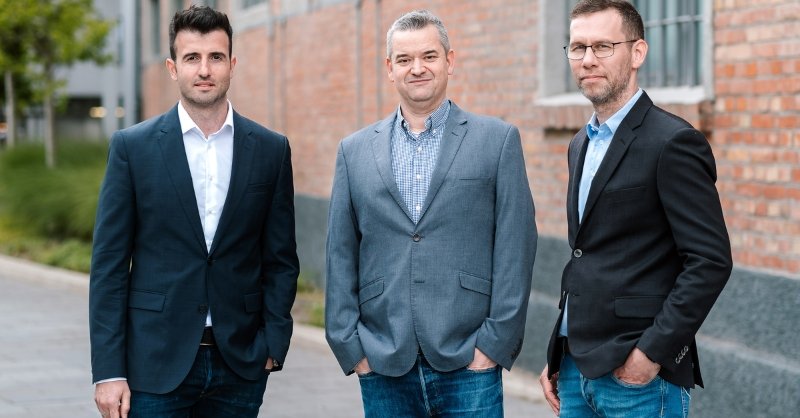
Cast AI crosses $1B valuation, adding Lithuania’s fifth unicorn
Cast AI, a Vilnius-rooted cloud infrastructure startup known for cutting enterprise cloud costs, has crossed the $1 billion valuation threshold, becoming Lithuania’s fifth unicorn. The milestone follows months of growing attention around the company’s pitch: helping enterprises run AI and Kubernetes workloads more efficiently while improving reliability—an increasingly urgent need as demand for GPU capacity accelerates globally.
In an interview, Laurent Gil, co-founder and president of Cast AI, framed the unicorn moment as a validation of the company’s technology rather than an endpoint. “The unicorn milestone validates what we’ve built, but the real work is always ahead of us,” he said, pointing to what he views as a structural problem in today’s AI infrastructure market: enterprises remain tightly bound to a single cloud provider and often a single region for critical workloads.
Breaking the single-cloud, single-region bottleneck
As AI adoption spreads from experimentation to production, companies are confronting constraints that go beyond pure spending. GPU shortages, regional capacity limits, and the operational risk of concentrating workloads in one place are pushing infrastructure leaders to rethink how they procure and manage compute.
“Right now, companies are locked into single cloud providers and defined regions for their AI workloads. That needs to change,” Gil said. Cast AI is betting that the next phase of AI infrastructure will require a control layer that can abstract away where compute runs, allowing enterprises to shift workloads based on availability, performance, resilience, and cost.
The company’s answer is OMNI Compute, which it describes as a layer that sits above hyperscalers and other providers. The goal: enable enterprises to tap GPU capacity “anywhere, across any cloud,” without refactoring applications or adding significant operational overhead. Over the next 12 to 18 months, Cast AI says its primary focus is to make OMNI Compute a standard interface for enterprise GPU access and operations.
Partnerships as a distribution strategy
To reach that ambition, Cast AI is leaning heavily on partnerships. Gil highlighted a relationship with Oracle and an investment from Shinsegae Group as early building blocks for a broader network that could expand capacity options for customers.
“My personal focus, together with my co-founders, is on the strategic partnerships that make this possible,” he said. “We’re building a network that lets enterprises tap into GPU capacity anywhere, across any cloud… That’s the category we’re defining.”
From cost optimization to production reliability
Cast AI has often been positioned as a cost-cutting platform—particularly because it has claimed it can reduce cloud bills by as much as 80%. But Gil argues that the company’s most important shift came when customers began trusting it with mission-critical production workloads rather than treating it as a savings tool.
“Everyone assumes we’re a cost optimisation company because we cut cloud bills by up to 80%. But the real product-market fit happened when enterprises started trusting us to run their production workloads because we made them more reliable,” he said.
That repositioning is central to how the company now markets itself: an SLO-first platform, prioritizing service-level objectives such as uptime and performance. Under this model, cost reduction is framed as a by-product of better infrastructure utilization and automated decision-making, rather than the primary objective.
Gil pointed to deployments at companies including Samsung and BMW as a key indicator of maturity. In his telling, these customers were not simply chasing savings; they were trying to improve performance and ensure applications remained stable under real-world demand.
Vilnius as a cultural advantage, not just a cost base
While many startups cite Eastern and Northern Europe as cost-efficient engineering hubs, Gil rejected the idea that Cast AI’s Lithuanian roots are primarily a financial strategy. Instead, he credited the local ecosystem with shaping the company’s operating culture—emphasizing ownership, pragmatism, and accountability.
“Lithuania’s tech ecosystem has given Cast AI something far more valuable than cost efficiency. It has shaped our culture of ownership, engineering maturity, and international mindset from day one,” he said.
According to Gil, the Vilnius team formed the company’s early DNA, with engineering decisions oriented toward solving hard infrastructure problems rather than optimizing for “vanity metrics” or short-term wins. Even as the company expanded globally, Vilnius has remained one of its key centers.
A distributed workforce and a focus on merit
Cast AI now employs more than 300 people across 34 countries, spanning Europe, North America, Latin America, Africa, and APAC. Gil said women represent roughly one-third of the company’s global workforce, including technical, operational, and leadership roles.
Rather than emphasizing quotas, he described diversity as a practical driver of better decisions. “For us, diversity is about building an environment where ideas are evaluated on merit, not hierarchy, and where different perspectives genuinely shape decisions, products, and outcomes,” he said.
“Building to last,” not building to exit
Cast AI is the third company built by Gil and his co-founders after earlier ventures that ended in acquisitions—Viewdle by Google and Zenedge by Oracle. Those exits informed how the team approaches the current business, he said, but do not define the goal.
“This time, we’re not building for an exit. We’re building a platform and a great business,” Gil said, arguing that an SLO-first mindset helps the company make longer-term product decisions that are not dictated by short-term revenue targets or boardroom optics.
As Lithuania adds another unicorn to its growing roster, Cast AI is positioning itself at the intersection of two powerful trends: the race for scalable GPU infrastructure and the enterprise push toward multi-cloud resilience. Whether OMNI Compute becomes a de facto interface for GPU access remains an open question—but the company’s $1B milestone signals that investors and customers increasingly see cloud orchestration and reliability as central to the next wave of AI deployment.
Related