Asymmetric Security lands $4.2M pre-seed to compress incident response timelines
Asymmetric Security, a London- and San Francisco-based cyber forensics startup, has raised $4.2 million in an oversubscribed pre-seed round as it targets one of the most persistent pain points in cybersecurity: the slow, manual work of investigating attacks. The company says its platform can reduce investigation and response from days—or even weeks—to hours by combining advanced automation with expert human validation.
The round was led by Susa Ventures, with participation from Halcyon Ventures and Overlook Ventures. The financing also included angel investors such as Charlie Songhurst of Meta, Matt Clifford, co-founder of Entrepreneur First, and Geoff Ralston, former president of Y Combinator.
Why faster investigations matter
Cyberattacks are becoming harder to track and contain, particularly as attackers adopt automation and AI-driven techniques. One of the most damaging categories, Business Email Compromise (BEC), represents a major share of reported incidents globally and has contributed to more than $55 billion in losses over the last decade, according to figures cited in the announcement.
In many organizations, incident response still depends on a patchwork of tools and manual workflows: pulling logs from multiple systems, correlating activity across endpoints and cloud services, and reconstructing timelines. That process often takes so long that by the time teams understand what happened, the attacker has already moved laterally, exfiltrated data, or monetized access.
Asymmetric Security is positioning its product as an “AI-native” approach to cyber investigations—automating high-volume tasks while keeping forensics experts in the loop for verification and decision-making.
AI for defense, with humans in the loop
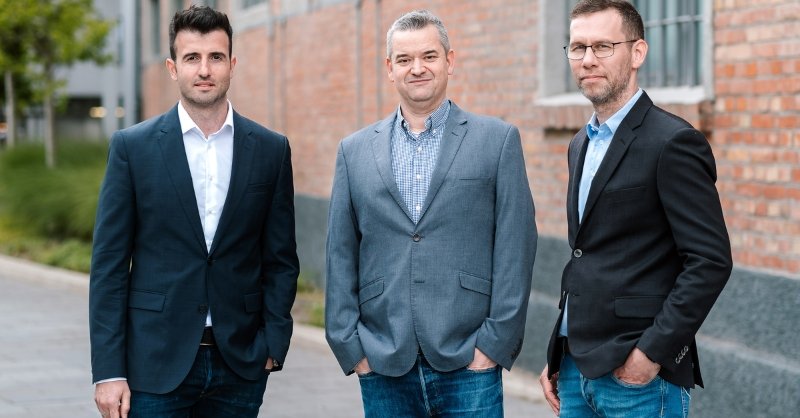
The company was founded by Zainab Ali Majid, Pippa Thompson, and Alexis Carlier. It describes its core offering as a blend of elite incident response expertise and secure automation designed to deliver rigorous investigations, including proactive threat hunting and active incident response.
“As AI progress accelerates toward AGI, the security stakes rise,” said Alexis Carlier, co-founder of Asymmetric Security, in a statement. “Autonomous AI attacks are no longer hypothetical, and AI model weight theft is now one of the most consequential security risks facing the West. We exist to accelerate AI cyberdefense and make AI an overwhelming advantage for defenders.”
According to the company, its platform uses real-world attack data to train and test its defensive systems. The product focuses on compressing time-to-clarity during investigations—helping teams determine what happened, what was accessed, and what actions should be taken next.
Product focus: compressing the investigation cycle
Asymmetric Security says its platform has already accelerated response efforts across more than 100 attacks, improving speed, accuracy, and cost efficiency. The company highlights several capabilities aimed at streamlining the early stages of incident response, where teams often lose valuable time:
- Rapid log pulls to collect relevant data quickly across systems
- AI-powered investigation to correlate events and surface likely root causes
- Human-in-the-loop validation to ensure findings meet forensic standards
- Defensive recommendations to guide containment and remediation
The broader bet is that enterprises want outcomes—fast, defensible conclusions and remediation steps—rather than simply more alerts. By packaging automation with expert oversight, the company aims to reduce the operational burden on internal security teams while producing investigation outputs that can stand up to executive scrutiny, regulators, or legal review.
Investor view: “full-stack AI services” for enterprise security
Chad Byers, co-founder and general partner at Susa Ventures, framed the investment around what he called a “full-stack AI services” thesis: building a services-led wedge that can expand into broader enterprise software distribution.
“We believe in the full-stack AI services thesis,” Byers said. “Asymmetric is the best company in the cyber incident response market, with a rare combination of incident response and AI expertise. Their cybersecurity services business is compelling on its own, but it also gives them a powerful distribution channel into the enterprise security market.”
What the funding will support next
Asymmetric Security plans to use the new capital to expand its engineering and incident response teams. Over the next year, the company also intends to broaden coverage beyond current use cases to include insider threats, ransomware, and nation-state-level incidents—areas where investigation quality and speed can be especially consequential.
As enterprises adapt to an environment where attackers can scale operations using automation, startups like Asymmetric Security are betting that defenders will respond by adopting tools that compress investigative cycles and make response more repeatable—without sacrificing forensic rigor. The company’s approach, pairing AI-driven automation with expert validation, is designed to meet that demand as incident response becomes more time-sensitive and complex.
Related