Aisti lands €20 million EIB venture debt to expand production
Jyväskylä-based materials startup Aisti has secured a €20 million loan from the European Investment Bank (EIB) to accelerate the scale-up of its bio-based, noise-reducing acoustic ceiling tiles. The financing will fund an expansion of the company’s production footprint in Kitee, a rural city in Eastern Finland, while also supporting research and development aimed at improving performance characteristics such as acoustics and fire resistance.
Mikko Paananen, founder and CEO of Aisti, said the EIB backing will enable the company to move faster than its original growth plan and meet rising demand for lower-carbon building materials. “Doubling our capacity strengthens our ability to offer a natural, recyclable alternative to traditional acoustic tiles – at the scale the market now demands,” he said, adding that the company’s broader goal is to help make healthier and lower-emissions construction materials “the new industry standard.”
What Aisti makes—and why it matters for indoor environments
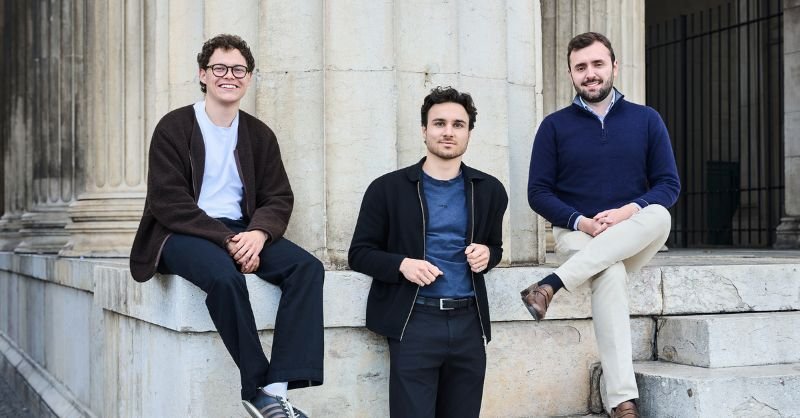
Founded in 2019 by Mikko Paananen, Antti Fredrikson, and Petri Jetsu, Aisti positions itself as a material technology company producing suspended ceiling acoustic tiles from renewable wood fibre. The company says it uses a foam-forming process to transform fibres into tiles designed to be safe, sustainable, recyclable, and competitively priced.
A key selling point is that the product is presented as an alternative to mineral wool-based tiles. Aisti argues that because its tiles do not contain mineral wool fibres, they avoid releasing such fibres into indoor air—an attribute it highlights for environments where indoor air quality is closely scrutinised, including schools and offices.
The company also states that the tiles have received global acoustics and indoor climate accreditations and have been tested to achieve fire resistance class B-s1, d0, a classification used in European fire testing standards.
Kitee factory expansion targets large-scale output from 2026
The EIB-backed project centres on Aisti’s new large-scale production facility in Kitee. According to the company, the expansion will enable it to double its planned production capacity of 2.5 million square metres of tiles. Manufacturing at the facility is scheduled to begin in the second half of 2026.
The EIB said the factory itself is expected to incorporate green features, including an energy-efficient production process powered by clean electricity. For Finland, the investment also underscores a recurring theme in Nordic industrial policy: pairing climate-oriented innovation with regional development outside major metropolitan hubs.
Loan structure: InvestEU venture debt without equity dilution
The financing falls under the InvestEU programme and is structured as venture debt—described by the EIB as a long-term loan that can offer flexible conditions while avoiding ownership dilution for founders and existing shareholders. In a market where hardware and materials companies often face higher capital requirements than software startups, venture debt has increasingly been used to bridge the gap between commercial traction and the heavy spending needed to scale production.
Karl Nehammer, Vice-President at the EIB, framed the loan as part of Europe’s broader industrial and climate ambitions. “Europe’s green transition depends on the emergence of innovative companies like Aisti,” he said, adding that the project supports the circular economy, rural development, and Europe’s capacity to produce sustainable construction materials at scale.
R&D and European expansion plans
Beyond factory build-out, Aisti said the loan will help intensify R&D to further enhance acoustic performance and fire-resistant properties. The company is also looking to expand across Europe, with a particular focus on the Nordic region—an early adopter market for low-carbon construction solutions and stricter building standards.
The construction sector remains a major emissions driver, and building materials have come under increasing pressure as regulators and developers look for ways to reduce embodied carbon. Bio-based materials, when responsibly sourced and manufactured, are frequently positioned as one route to decarbonising the built environment—though scaling them to industrial volumes has been a persistent challenge for many startups.
Funding track record and investor backing
The EIB loan follows prior equity financing rounds for Aisti. In 2024, the company closed a €29 million Series A round, and in 2022 it raised €1.6 million. The startup is backed by investors including Voima Ventures, Maki.vc, Finnvera, and Valve Ventures.
The new financing also contributes to the EIB’s TechEU initiative, which aims to accelerate innovation and scaling in strategic European technologies, including sustainable and biomass-based solutions.
Outlook: scaling a niche product into a mainstream building material
If Aisti can execute on its 2026 production timeline and ramp output as planned, the company will be better positioned to compete in a market historically dominated by mineral wool and other established ceiling systems. The next test will be converting its technical claims—around recyclability, indoor air quality, and performance—into broad procurement wins across commercial and public-sector construction, where cost, certification, and supply reliability often determine adoption.
For the EIB, the deal signals continued appetite for backing climate-aligned industrial scale-ups that combine manufacturing capacity with innovation, particularly where projects also support regional development and European supply-chain resilience.
Related