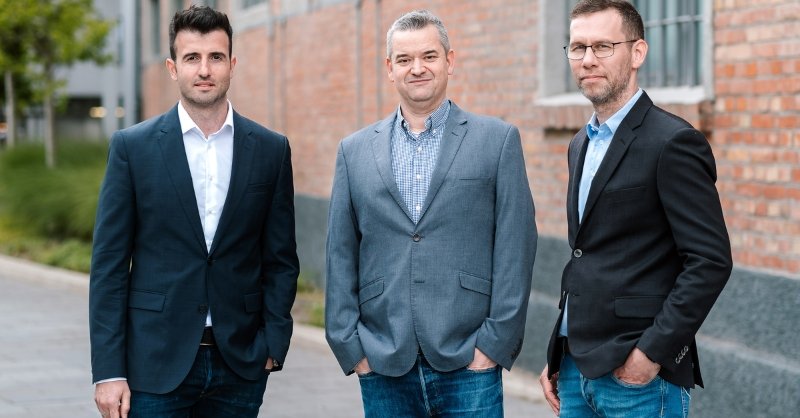
AINA lands $1M seed round to streamline recruiting
AINA, a Limassol-based recruitment technology company, has raised a $1 million seed round as it targets one of the most persistent pain points in modern hiring: the time and cost required to move from applicant interest to signed offer. The company says its platform can automate up to 80% of the recruitment workflow, helping employers reduce manual work, shorten hiring cycles, and improve consistency in candidate screening.
According to the company, early deployments have delivered measurable outcomes for customers, including $600,000+ in savings and a reduction in time-to-hire by up to 80%. The funding is expected to support product development and go-to-market expansion as demand grows for tools that can handle higher applicant volumes without ballooning recruiting headcount.
The hiring bottleneck: too many applicants, too little time
Recruiting teams have faced mounting pressure over the past several years. Even as some sectors cool, many employers still contend with a mismatch between open roles and qualified candidates, while others face the opposite problem: a flood of applications that overwhelms internal teams. In both scenarios, the process often relies on manual steps—resume screening, outreach, scheduling, and repetitive candidate communications—that slow down decision-making and increase costs.
AINA is positioning its product as an end-to-end automation layer for those tasks. By using AI-driven workflows to handle routine screening and coordination, the company aims to free recruiters to focus on higher-value work such as stakeholder alignment, structured interviews, and closing candidates.
What AINA says it automates
While the company has not disclosed detailed technical specifications in the announcement, it says its platform automates a large portion of the typical recruiting pipeline. That generally includes steps such as:
- Initial candidate screening and prioritization
- Candidate outreach and follow-ups
- Interview scheduling and coordination
- Workflow tracking and reporting for hiring teams
By compressing these steps, AINA claims customers can reduce delays that often cause candidates to drop out of processes, especially in competitive roles where top applicants may be interviewing with multiple employers simultaneously.
Cost savings and speed as the primary pitch
The company’s headline metrics focus on two outcomes executives care about most: cost and speed. $600,000+ in savings suggests an impact on recruiter workload, agency spend, or the opportunity cost of unfilled roles. Meanwhile, cutting time-to-hire by up to 80% can translate into faster team scaling, reduced project delays, and less revenue left on the table due to understaffing.
However, hiring leaders typically evaluate automation tools on more than efficiency alone. Consistency, fairness, and auditability in screening decisions are increasingly important, particularly as regulators and employers scrutinize how AI is used in employment decisions. As AINA expands, buyers are likely to ask how the system explains recommendations, how it mitigates bias, and how it integrates with existing applicant tracking systems.
Why investors are backing recruiting automation
AI has rapidly reshaped the HR technology landscape, with a growing number of startups promising to reduce administrative work and improve candidate matching. Investors have shown interest in platforms that can demonstrate clear ROI, especially when the value proposition is easy to quantify—such as reducing recruiter hours, lowering agency costs, or accelerating hiring for revenue-generating teams.
AINA’s seed round arrives as companies seek pragmatic AI automation rather than experimental pilots. In that environment, products that can show repeatable savings and faster cycle times may find receptive customers, particularly among firms hiring at scale in sales, customer support, operations, and technical roles.
What comes next for AINA
The company has not provided details about the participating investors or valuation, but seed funding typically supports a mix of product hardening and commercial growth. For AINA, that likely means expanding integrations, improving workflow coverage across more job families, and building the sales and customer success capacity needed to scale beyond early adopters.
As the market becomes more crowded, differentiation will depend on outcomes and trust. Buyers will look for proof that automation improves hiring quality rather than simply speeding up the process, and that it can be deployed without disrupting existing HR operations. If AINA can sustain its reported savings and time reductions across a broader customer base, the company could become a notable player in the next wave of AI-powered recruitment platforms.
Related