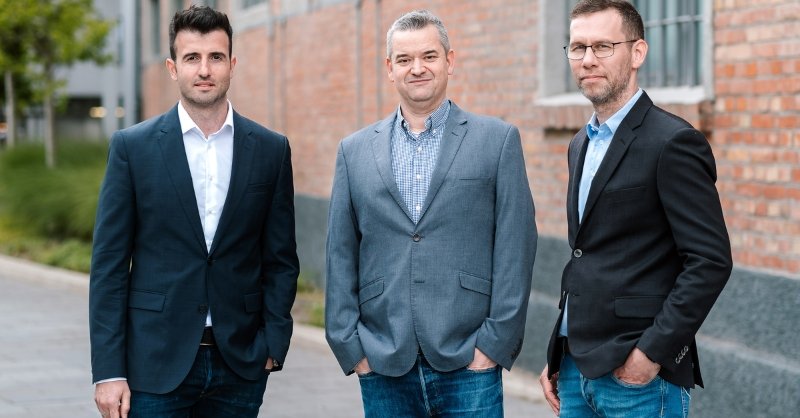
Golden Owl closes €1.4M seed round led by First Drop
Spanish deeptech startup Golden Owl has raised a €1.4 million seed round to scale an AI-driven intelligence platform designed to help organisations detect disinformation, hybrid threats, and emerging supply-chain and infrastructure risks. The round was led by Valencia-based impact fund First Drop, with participation from business angels and public support mechanisms, including ENISA certification and a NEOTEC grant from CDTI.
Founded by Ana Beik and Sabi Soltani, the company positions its product as a way to convert fragmented, open-source information into actionable geopolitical and business intelligence. The platform ingests data across the open web, deep web, and dark web, then integrates content across formats and languages.
Beyond keyword monitoring with multi-agent AI
Golden Owl says it relies on a multi-agent architecture that handles large-scale collection, real-time anomaly detection, and automated cross-checking. Rather than tracking simple keywords, the system builds dynamic models of subjects, relationships, and context—aiming to identify behavioural shifts and network formation early, before disruptions become obvious.
Dual-use focus: security and business risk
The company currently targets two customer segments. On the security side, it supports detection of hybrid threats, influence campaigns, and coordinated actions, while also aiding infrastructure protection and forensic investigations. For enterprises, it offers supply-chain monitoring, geopolitical and regulatory risk analysis, competitor intelligence, and what it describes as federated intelligence.
Golden Owl is entering a crowded market that includes Palantir, Recorded Future, and Babel Street. The startup argues its differentiation lies in combining unstructured, non-indexed sources with a reasoning layer capable of linking disparate signals into coherent risk narratives.
What the funding will support
The new capital will be used to strengthen the technical stack, broaden access to non-indexed data sources across the web tiers, and accelerate commercial rollout in sectors including energy, logistics, industry, security, and the public sector. Beik noted the company’s work often remains invisible, embedded in decision-making processes that rarely cite underlying sources.
Related