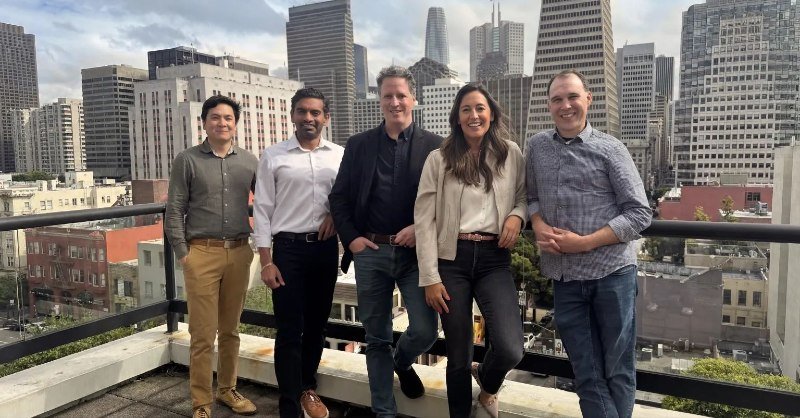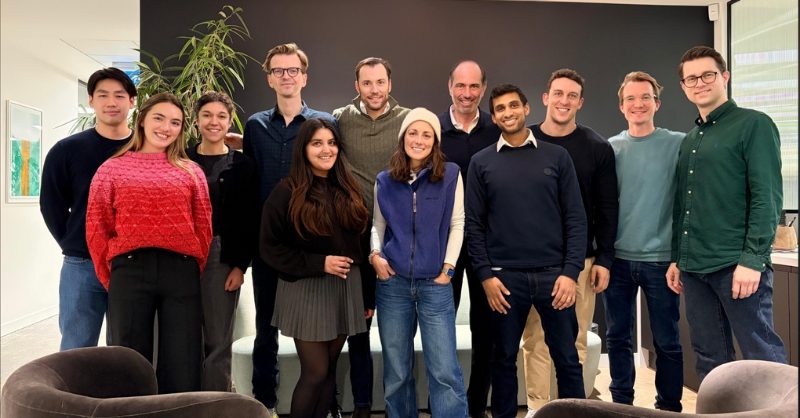
2150 finalizes second fund focused on sustainable cities
2150, a climate-focused venture capital firm backing technologies that cut emissions in cities and industrial systems, has closed its second fund at €210 million, bringing the firm’s total assets under management to €500 million. The final close expands the investor base across Europe, Asia and North America, the firm said.
The milestone arrives as investors continue to search for scalable climate solutions that can compete on cost and performance, particularly in sectors tied to urbanization—where emissions, waste and infrastructure demand are concentrated.
Turning urbanization into a climate solution
2150 was founded in 2021 by Jacob Bro, Christian Jolck, Rahul Parekh and Christian Hernandez with the thesis that city growth can be decoupled from rising emissions. The firm targets startups reshaping the built environment, energy systems and industrial supply chains—areas that often require deep technical innovation and long-term commercialization pathways.
Christian Jolck, co-founder and partner at 2150, said the firm has built a portfolio and platform designed to support companies that can scale globally. “Four years after unveiling 2150, we have raised €500m, invested in 27 companies and mitigated over a megatonne of CO2e per year,” he said, adding that portfolio companies have aggregate revenue exceeding $1 billion and employ more than 4,500 people.
Jolck also pointed to the composition of the new fund’s limited partners. “For Fund II, we have continued to partner with leading institutional investors across Europe, North America, and Asia, who have invested in this category for multiple cycles,” he said. He added that the mix strengthens the firm’s conviction in its ability to deliver “attractive long-term returns” while building a durable investment platform.
What 2150 invests in
The firm’s strategy centers on technologies that can materially reduce emissions tied to the world’s cities—spanning construction and materials, electrification, circular economy infrastructure, and industrial decarbonization. While Fund II is newly finalized, the firm said the capital is already supporting a set of companies working across these themes.
Among the startups cited are:
- AtmosZero, focused on electrifying industrial heat, a major source of hard-to-abate emissions.
- GetMobil, which targets circularity through refurbished electronics.
- Metycle, a platform for circular metal trading aimed at improving material reuse and supply chain efficiency.
- Mission Zero Technologies, working on direct air capture to remove carbon dioxide from the atmosphere.
Christian Hernandez, co-founder and partner at 2150, said additional investments are in progress, with three more deals in the pipeline that remain unannounced.
Stage focus and cross-border scaling
Hernandez said the firm’s investment approach remains consistent with its first fund. “Our investing thesis remains the same as before,” he said. “We’re still mainly targeting companies at the Series A stage, while also pursuing deals at seed and later stages.”
He also emphasized the firm’s transatlantic posture—sourcing technologies that can be transferred between markets and helping companies expand internationally. “We’re still investing across the Atlantic, finding technologies we can bring into Europe. Conversely, we scale European companies that we can take into the US,” Hernandez said.
That market-to-market strategy also extends beyond the typical U.S.-Europe corridor. Hernandez noted the firm looks for “specific problems where we find solutions in other markets,” citing investments in countries such as Brazil, Turkey and Singapore.
Diversity and portfolio reporting
Asked about diversity, Hernandez said the firm promotes diversity and inclusion across its team and portfolio. He pointed to a public diversity policy and collaboration with Diversity VC, along with portfolio metrics that track management diversity and incorporate diversity and inclusion considerations into due diligence.
Post-investment, the firm said it works with founders to track and report efforts at a board level—an approach increasingly adopted by venture firms seeking to formalize governance and measurement around diversity commitments.
What comes next
With Fund II finalized, 2150 plans to scale its activity across Europe while pushing further into North America and Asia. Hernandez said the firm aims to back founders building solutions that can win on economics without relying on policy support.
“We continue to champion founders contributing to the health of the planet by scaling efficient and cost-competitive solutions without the need for regulatory obligations or government grants,” Hernandez said, adding that this approach has helped insulate the portfolio from shifting climate policy dynamics “in the U.S and elsewhere.”
The close underscores continued investor interest in climate tech aimed at the physical economy—where emissions reductions are often harder to achieve but can be significant when technologies reach scale. For 2150, the new fund expands resources to pursue that thesis across multiple geographies and sectors tied to how cities are built, powered and supplied.
Related