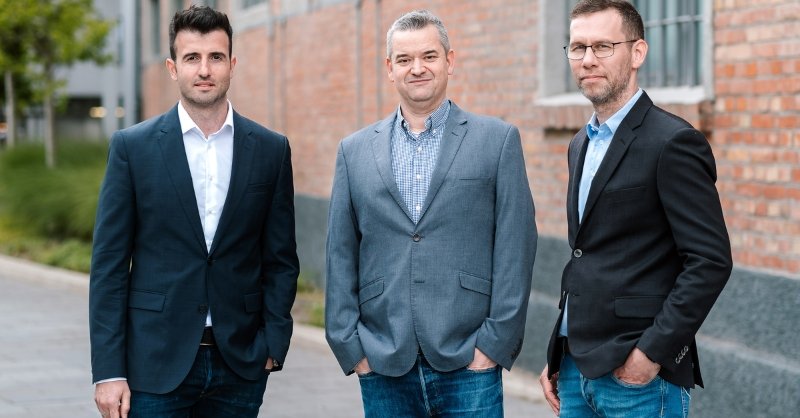
RadixArk emerges from UC Berkeley’s SGLang project
The open-source AI performance tool SGLang has officially spun out into a standalone company called RadixArk, reaching an estimated valuation of about $400 million, according to people familiar with the matter. The move underscores a growing commercialization wave in AI infrastructure, where research-born and open-source tooling is increasingly being packaged into venture-backed businesses as demand accelerates.
SGLang began in 2023 as a research effort inside a University of California, Berkeley lab led by Ion Stoica, a prominent computer scientist and co-founder of Databricks. The software focuses on improving the efficiency of AI systems during inference—the stage when a trained model generates outputs in response to prompts or data. Inference has become a major cost driver for companies deploying large language models and other AI systems at scale, pushing performance optimization tools into the spotlight.
Why inference optimization is becoming a hot market
While model training still commands attention, much of the day-to-day expense for AI products can come after training is complete. In production settings—chatbots, copilots, search, summarization, and agents—models must answer requests quickly and reliably. That makes inference speed, latency, and compute efficiency central to both user experience and unit economics.
SGLang was built to make large AI models run faster and more affordably, helping teams reduce compute requirements and improve throughput. By accelerating the inference pipeline, tools like SGLang can lower cloud bills and enable more real-time use cases.
Adoption by AI builders
The project has seen usage among teams at companies including xAI and Cursor, according to the report. As interest in inference performance and deployment tooling has surged, part of the original SGLang team left the UC Berkeley lab to join the newly formed startup.
Funding and backers
People familiar with the situation say RadixArk raised capital from investors including venture firm Accel as well as early angel backers such as Intel CEO Lip-Bu Tan. The financing and valuation reflect investor conviction that inference infrastructure—software that makes AI models cheaper and faster to run in real time—will be a durable category as enterprise and consumer AI adoption expands.
RadixArk was publicly announced in August, and the team behind it has since fully shifted away from the original university-based open-source project. The transition marks a formal step from academic research to commercial operations, a path that has become increasingly common in AI as open-source projects mature and attract production users.
RadixArk’s product strategy: open source plus services
Despite the corporate spinout, RadixArk plans to continue developing SGLang as an open-source engine. The company is also building additional tooling, including Miles, described as a reinforcement learning framework designed to help models improve over time.
At the same time, the company has started to monetize through paid hosting services. This “open core” style approach—keeping core software free while charging for hosted, managed, or enterprise-grade offerings—has become a familiar playbook in infrastructure markets, particularly when developer adoption is strong but operational complexity creates demand for turnkey services.
A broader trend in AI infrastructure
RadixArk’s evolution mirrors a broader shift across AI tooling. As organizations move from experimentation to production, they are looking for performance gains, reliability, and predictable costs. That has created a fast-growing market for companies focused on inference optimization, model serving, orchestration, and monitoring.
In this environment, projects that start as academic research or community-driven open source can rapidly become foundational components in commercial stacks. Once that happens, venture capital often follows—especially when the technology addresses a high-frequency pain point like inference cost and latency.
What to watch next
The key question for RadixArk will be how it balances open-source momentum with commercial expansion. Maintaining trust with developers while building a sustainable business typically requires clear product boundaries, strong documentation, and a roadmap that benefits both community users and paying customers.
With a reported valuation near $400 million and backing from major investors, RadixArk enters a competitive but rapidly expanding segment of the AI market—one where the winners may be determined less by model breakthroughs and more by the practical economics of running AI at scale.
Related