Dropout status is resurfacing as a startup credential
The mythology of the college dropout founder has long been embedded in Silicon Valley lore, fueled by iconic examples such as Steve Jobs, Bill Gates, and Mark Zuckerberg. Yet research on entrepreneurship consistently suggests that most successful startup founders hold at least a bachelor’s degree—and often a graduate degree. Despite that data, the “un-degreed” narrative is again gaining traction, driven in part by the pace and hype of the current AI cycle.
Investors and founders say the trend is especially visible during Y Combinator Demo Days, where one-minute pitches increasingly include a line about leaving school early. Katie Jacobs Stanton, founder and general partner at Moxxie Ventures, said she has noticed more founders highlighting dropout status across recent batches.
“I don’t believe YC formally tracks dropout status but, anecdotally, in recent batches, I was struck by how many founders highlight being a dropout from college, grad school, and even high school,” Stanton said. In today’s venture ecosystem, she added, “Being a dropout is a kind of credential in itself, reflecting a deep conviction and commitment to building.”
The AI boom is amplifying urgency—and fear of missing the window
The renewed appeal of dropping out is tied to a broader sentiment among aspiring founders: that the most important opportunities in AI are available right now, and that waiting to graduate could mean arriving too late. As new models and developer tools ship at breakneck speed, some entrepreneurs view a traditional academic timeline as misaligned with the market’s tempo.
That urgency is being reinforced by investors who focus on early-stage companies, including those watching the Y Combinator pipeline. Kulveer Taggar, founder of the YC-focused venture firm Phosphor Capital, described the current mood as a form of “urgency and maybe FOMO,” a calculation that forces a choice: finish school, or start building immediately.
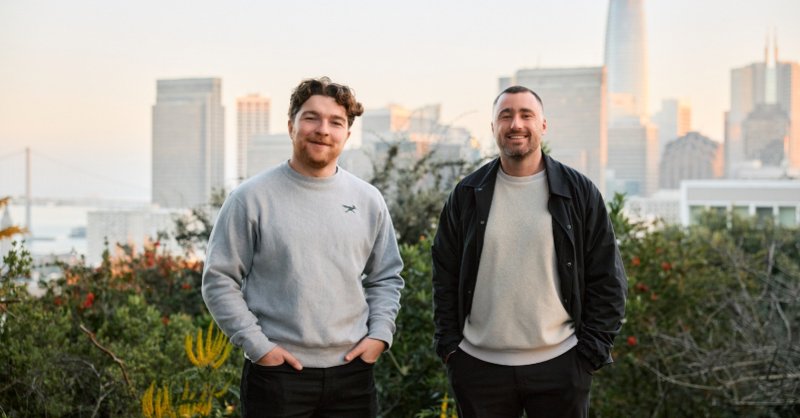
The phenomenon has produced some high-profile examples. Brendan Foody, who co-founded Mercor, left Georgetown to pursue the startup full-time, a move that mirrors earlier Silicon Valley narratives even as the industry’s underlying data points in a different direction.
Most prominent AI founders still stayed for the diploma
Even with the dropout storyline rising in visibility, many of the best-known founders in the current AI wave did not follow it. Several leaders of fast-growing AI companies completed degrees at elite institutions, underscoring that the market is not uniformly rewarding dropout status.
Among the examples cited by investors: Michael Truell, the CEO of Cursor, graduated from MIT, while Scott Wu, co-founder of Cognition, graduated from Harvard. Their paths suggest that, even in a moment defined by speed, credentials and formal training remain common among breakout teams.
From “badge of honor” to perceived liability
In some cases, the social signaling around education has become so distorted that founders fear a completed degree could be a negative indicator to investors—an extreme interpretation of venture culture’s obsession with intensity and commitment. One professor at an elite university recently described a student walking away in the final semester, convinced that graduating would reduce funding odds.
That view is far from universal among venture capitalists. Yuri Sagalov, who leads seed strategy at General Catalyst, said the dropout label tends to matter less than founders assume—particularly for students close to finishing.
“I don’t think I’ve ever felt any different about someone who graduated or didn’t graduate when they’re in [their] fourth year and drop out,” Sagalov said, arguing that investors are generally more focused on the product, the market, and a founder’s ability to execute.
Networking and brand still matter—even without the diploma
While some founders argue that self-teaching and open-source tools have reduced the need for formal education, investors note that universities still provide value that can carry over into startups. Sagalov emphasized the importance of network effects—relationships, credibility, and the institutional brand—regardless of whether a student completes the degree.
“You get a lot of the social value… because you can put the fact that you participated,” he said, adding that in practice, “Most people will look you up on LinkedIn and not care as much whether you finished or not.”
This framing suggests a middle ground: founders can benefit from the ecosystem that top schools offer while still leaving early if the opportunity is compelling—without assuming that dropping out is inherently a fundraising advantage.
Not every investor is buying the dropout narrative
Even as the market celebrates speed and youthful ambition, some investors remain cautious about backing very young founders. Wesley Chan, co-founder of FPV Ventures, said he is less eager to invest in dropouts because he prioritizes a trait he believes many young founders have not yet developed: wisdom.
Chan argues that wisdom is more often found in “older founders or people who have a couple of scars under their belt,” reflecting a belief that experience—especially hard-earned experience—can be as important as technical ability in building durable companies.
A trend that cycles with the market
Ultimately, investors describe the dropout founder as a cyclical fashion in venture capital—surging when the market rewards boldness and speed, and fading when conditions demand operational discipline and proven execution. The current AI boom, with its intense competition and rapid iteration, is giving the narrative fresh momentum.
But the underlying reality appears more nuanced: most successful founders still have degrees, many investors do not treat dropout status as a decisive factor, and the best outcome may depend less on leaving school than on whether a founder is building something that users want—and can scale.
Related